Ray McGovern leads a delegation to serve the indictments on the White House
For the first time in U.S. history, a people's tribunal has served both the Counsel to the President Harriet Miers and Attorney General Alberto Gonzales with indictments charging the President and his administration with war crimes and crimes against humanity (read these indictments at www.bushcommission.org/indictments.htm).
Funds are urgently needed to fly in the remaining key witnesses. Checks should be made out to "Not In Our Name" and mailed to Not In Out Name, 305 West Broadway, #199, New York, NY 10013. Contributions can be made on line at www.nion.us/NSOC/sign.htm. If you can donate frequent flyer miles, write to
The last three days of testimony will be January 20-22 in New York (see www.bushcommission.org for details and registration). If you cannot attend in person, write to C-Span at events@c-span.org today, and ask that they broadcast this historic event.
Judges: Adjoa Aiyetoro, Prof. of Law at Univ. of Arkansas; Dennis Brutus, South African exile poet; Abdeen Jabara, former president of the American-Arab Anti-Discrimination Committee; Ajamu Sankofa, executive director of Physicians for Social Responsibility-NY; Ann Wright, former foreign service officer who resigned from the State Department to protest the war on Iraq.
Key Witnesses & Prosecutors: Brig. Gen. Janis Karpinski; Craig Murray, former British ambassador to Uzbekistan; Scott Ritter, former UN weapons inspector; Lindsey German, Convener, UK Stop the War Coalition; Michael Ratner, president, Center for Constitutional Rights; Ray McGovern, former CIA analyst; Dahr Jamail, journalist reported extensively from Iraq; Marjorie Cohn, president-elect National Lawyers Guild; Barbara Olshansky, Center for Constitutional Rights; Ted Glick, Climate Crisis Coalition; Daphne Wysham, Institute for Policy Studies, Sustainable Energy & Economy Network; Tom Devine, Government Accountability Project; Chokwe Lumumba, attorney and human rights activist; Jeremy Scahill, The Nation; Steven Miles; Dr. Thomas Fasy; Katrina survivors; representative of AfterDowningStreet.org
Also Video: Stop the War – The Iraq War 2003 -2006: evidence from Pentagon; BBC and Channel 4 film footage of Grave Breaches of The Hague and Geneva Conventions;
1945 Nuremberg Charter and United Nations Charter in support of Tony Benn's Submission to The UN and UK Attorney General of December 2005 (including leaked Pentagon gun-camera footage of the U.S. assault on Fallujah)
These hearing are an instrumentality of world humanity, arising from the historical, moral and political responsibility of people of conscience to sit in judgment of what is being done in their name. It is your financial support is what makes this possible. Please contribute what you think it is worth to have these crimes against documented as part of a comprehensive prosecution.
Volunteers needed in the New York area! Contact the office at commission@nion.us.
Saturday, January 14, 2006


Friday, January 13, 2006
Predictions of an Economic Hit Man
By John Perkins, AlterNet
Posted on January 13, 2006
http://www.alternet.org/story/30681/
Most people in the United States know that a transit strike crippled New York City. Fewer are aware that seven South American countries, representing over 80 percent of the continent's population, recently elected presidents with anti-American sentiments. The former has an immediate effect. The latter will impact our children for decades to come.
In December 2005, Evo Morales buried seven challengers -- taking 54 percent of the vote -- in what the New York Times referred to as "the most important election since Bolivia's transition from dictatorship to democracy a generation ago." His platform appealed to the poor, including farmers whose main source of income, coca plants, caused them to suffer brutal treatment at the hands of U.S. drug agents. Although U.S. politicians and the media have denounced coca because it is used to produce cocaine, the fact is that it is extremely important in the Andes as a legal remedy for altitude sickness, digestive problems and other illnesses.
Evo Morales is the latest in a long list of democratically elected Latin American presidents whose primary appeal is their opposition to U.S., IMF and World Bank policies that favor foreign corporations with reputations for exploiting natural resources and local labor. Bolivia joins the ranks of previously pro-American countries that have recently turned against Washington and Wall Street, such as Argentina, Brazil, Chile, Ecuador, Uruguay and Venezuela.
Argentina's President Kirchner recently announced what has been hailed as an "anti-IMF rebellion." He paid off nearly $10 billion in IMF debt in order to get out from under a burden that, he said, "caused poverty and pain among the Argentine people."
Venezuela's President Chavez has become a popular spokesman for anti-U.S. sentiments around the world.
Ecuador's President Gutierrez was thrown out of office by a popular grass-roots uprising when he capitulated to economic hitman threats and bribes, and went against his campaign promises to force U.S. oil companies to pay more to the Ecuadorian people for Ecuadorian oil. An Ecuadorian friend told me, "If a democratically elected official does not honor his campaign promises, democracy demands that we replace him."
In the past year, a rising tide of people throughout the world has been rebelling against policies they see as unjust. This has occurred in Africa, Asia, Europe, Latin America and the Middle East, as well as in the United States, where New York transit workers fought to defend their economic well-being. As one transit worker told me, "We're sick of being told that our families must sacrifice while huge corporations and their executives receive tax breaks."
This rebellion is facilitated by the internet, cell phones and satellite dishes. People in places once considered remote are increasingly aware of statistics such as these:
Unrest in New York and Latin America, as well as in Africa, Asia, Europe and the Middle East are harbingers of the difficulties that will haunt future generations -- unless we take heed. They serve notice that if we want a peaceful and prosperous future for our children, we must recognize basic human needs; we must insist that all people -- not just those at the top -- have the right to justice and dignity. Bolivian voters, NYC transit workers and democratically elected presidents of other countries are warning us that the bottom line of the corporate balance sheet is not the final statement upon which our society will ultimately be graded.
John Perkins is the author of "Confessions of an Economic Hit Man." His website is johnperkins.org.
Posted on January 13, 2006
http://www.alternet.org/story/30681/
Most people in the United States know that a transit strike crippled New York City. Fewer are aware that seven South American countries, representing over 80 percent of the continent's population, recently elected presidents with anti-American sentiments. The former has an immediate effect. The latter will impact our children for decades to come.
In December 2005, Evo Morales buried seven challengers -- taking 54 percent of the vote -- in what the New York Times referred to as "the most important election since Bolivia's transition from dictatorship to democracy a generation ago." His platform appealed to the poor, including farmers whose main source of income, coca plants, caused them to suffer brutal treatment at the hands of U.S. drug agents. Although U.S. politicians and the media have denounced coca because it is used to produce cocaine, the fact is that it is extremely important in the Andes as a legal remedy for altitude sickness, digestive problems and other illnesses.
Evo Morales is the latest in a long list of democratically elected Latin American presidents whose primary appeal is their opposition to U.S., IMF and World Bank policies that favor foreign corporations with reputations for exploiting natural resources and local labor. Bolivia joins the ranks of previously pro-American countries that have recently turned against Washington and Wall Street, such as Argentina, Brazil, Chile, Ecuador, Uruguay and Venezuela.
Argentina's President Kirchner recently announced what has been hailed as an "anti-IMF rebellion." He paid off nearly $10 billion in IMF debt in order to get out from under a burden that, he said, "caused poverty and pain among the Argentine people."
Venezuela's President Chavez has become a popular spokesman for anti-U.S. sentiments around the world.
Ecuador's President Gutierrez was thrown out of office by a popular grass-roots uprising when he capitulated to economic hitman threats and bribes, and went against his campaign promises to force U.S. oil companies to pay more to the Ecuadorian people for Ecuadorian oil. An Ecuadorian friend told me, "If a democratically elected official does not honor his campaign promises, democracy demands that we replace him."
In the past year, a rising tide of people throughout the world has been rebelling against policies they see as unjust. This has occurred in Africa, Asia, Europe, Latin America and the Middle East, as well as in the United States, where New York transit workers fought to defend their economic well-being. As one transit worker told me, "We're sick of being told that our families must sacrifice while huge corporations and their executives receive tax breaks."
This rebellion is facilitated by the internet, cell phones and satellite dishes. People in places once considered remote are increasingly aware of statistics such as these:
* Transnational corporations have taken control of much of the production and trade in developing countries: For example, 40 percent of the world's coffee is traded by just four companies; the top 30 supermarket chains control almost one-third of worldwide grocery sales.
* A trade surplus of $1 billion for developing countries in the 1970s turned into an $11 billion deficit by 2001.
* The income ratio of the one-fifth of the world's population in the wealthiest countries to the one-fifth in the poorest went from 30 to 1 in 1960 to 74 to 1 in 1995.
* Of the 100 largest economies in the world, 51 are corporations; of those, 47 are U.S.-based.
* The overall share of federal taxes paid by U.S. corporations is now less than 10 percent, down from 21 percent in 2001 and over 50 percent during World War II; one-third of America's largest and most profitable corporations paid zero taxes -- or actually received credits -- in at least one of the last three years (according to Forbes magazine).
* Back in 1980 the average American chief executive earned 40 times as much as the average manufacturing employee. For the top tier of American CEOs, the ratio is now 475:1 and would be vastly greater if assets, in addition to income, were taken into account. By way of comparison, the ratio in Britain is 24:1, in France 15:1, in Sweden 13:1.
* Pre-Civil War slaves received room and board; wages paid by the sweatshops that today serve many U.S. industries will not cover the most basic needs.
Unrest in New York and Latin America, as well as in Africa, Asia, Europe and the Middle East are harbingers of the difficulties that will haunt future generations -- unless we take heed. They serve notice that if we want a peaceful and prosperous future for our children, we must recognize basic human needs; we must insist that all people -- not just those at the top -- have the right to justice and dignity. Bolivian voters, NYC transit workers and democratically elected presidents of other countries are warning us that the bottom line of the corporate balance sheet is not the final statement upon which our society will ultimately be graded.
John Perkins is the author of "Confessions of an Economic Hit Man." His website is johnperkins.org.
Wednesday, January 11, 2006
Different Americas
By SAUL LANDAU
George W. Bush, like the old European monarchs, claimed he possessed inherent rights and implied that those who question such prerogatives might have treasonous motives. "As President and Commander-in-Chief, I have the constitutional responsibility and the constitutional authority to protect our country," Bush responded to stories of his authorizing wiretaps on US citizens without getting legal permission. Bush then turned on the leakers.
"It was a shameful act for someone to disclose this very important program in a time of war," said Bush. "The fact that we're discussing this program is helping the enemy." Bush did not consider "shameful" the 2003 disclosure of a covert CIA operative's name to the media (Valerie Plame) by members of his staff. Nor did he recall that he assured the public that "a wiretap requires a court order It's important for our fellow citizens to understand, when you think Patriot Act, constitutional guarantees are in the place" April 20, 2004
W didn't seem to sense any contradiction between what he said and did. He also denied that the US practiced torture as the press revealed that his war on terrorism had spawned torture at Guantanamo, Cuba, Abu Ghraib, Iraq and at secret CIA-run prisons throughout the world. He also did not like the medias reporting on US agents kidnapping suspected terrorists and shipping them elsewhere (rendition) for torture and interrogation. For the Bush family such issues did not merit discussion as holiday conversation.
Indeed, the inner circle felt satisfied that on December 17, Bush had defined the proper position in his national radio address (and on TV). Wire tapping US citizens without warrants was "fully consistent" with his "constitutional responsibilities and authorities" (cnn.com, December, 17, 2005).
A week earlier he had snapped at a reporter who raised the constitutional question. "I don't give a goddamn. I'm the President and the Commander-in-Chief. Do it my way."
One aide apparently said. "There is a valid case that the provisions in this law undermine the Constitution."
"Stop throwing the Constitution in my face," Bush screamed back. "It's just a goddamned piece of paper!" (Doug Thompson, Capitol Hill Blue, Dec 8, 2005).
More...
George W. Bush, like the old European monarchs, claimed he possessed inherent rights and implied that those who question such prerogatives might have treasonous motives. "As President and Commander-in-Chief, I have the constitutional responsibility and the constitutional authority to protect our country," Bush responded to stories of his authorizing wiretaps on US citizens without getting legal permission. Bush then turned on the leakers.
"It was a shameful act for someone to disclose this very important program in a time of war," said Bush. "The fact that we're discussing this program is helping the enemy." Bush did not consider "shameful" the 2003 disclosure of a covert CIA operative's name to the media (Valerie Plame) by members of his staff. Nor did he recall that he assured the public that "a wiretap requires a court order It's important for our fellow citizens to understand, when you think Patriot Act, constitutional guarantees are in the place" April 20, 2004
W didn't seem to sense any contradiction between what he said and did. He also denied that the US practiced torture as the press revealed that his war on terrorism had spawned torture at Guantanamo, Cuba, Abu Ghraib, Iraq and at secret CIA-run prisons throughout the world. He also did not like the medias reporting on US agents kidnapping suspected terrorists and shipping them elsewhere (rendition) for torture and interrogation. For the Bush family such issues did not merit discussion as holiday conversation.
Indeed, the inner circle felt satisfied that on December 17, Bush had defined the proper position in his national radio address (and on TV). Wire tapping US citizens without warrants was "fully consistent" with his "constitutional responsibilities and authorities" (cnn.com, December, 17, 2005).
A week earlier he had snapped at a reporter who raised the constitutional question. "I don't give a goddamn. I'm the President and the Commander-in-Chief. Do it my way."
One aide apparently said. "There is a valid case that the provisions in this law undermine the Constitution."
"Stop throwing the Constitution in my face," Bush screamed back. "It's just a goddamned piece of paper!" (Doug Thompson, Capitol Hill Blue, Dec 8, 2005).
More...
The Scoop That Got Spiked
Times delay on wiretap story leaves questions unanswered
1/11/06
By any standard, the New York Times' story of December 16 was a blockbuster: Reporters James Risen and Eric Lichtblau revealed that following the September 11 attacks, the Bush administration initiated warrantless wiretaps on hundreds of people within the U.S.--including U.S. citizens--even though a federal law, the Foreign Intelligence Surveillance Act of 1978, expressly forbids the government from doing so. This program was legal only if one accepts the administration's contention that the executive branch has essentially unlimited powers during "wartime" (even though Congress has not declared war).
The Times story would be an outstanding example of how the First Amendment works to protect liberty--were it not for the ninth paragraph:
"The White House asked The New York Times not to publish this article, arguing that it could jeopardize continuing investigations and alert would-be terrorists that they might be under scrutiny. After meeting with senior administration officials to hear their concerns, the newspaper delayed publication for a year to conduct additional reporting. Some information that administration officials argued could be useful to terrorists has been omitted."
The reasoning is absurd on its face. As Times executive editor Bill Keller noted in a statement released on December 16 explaining his decision to publish the story, "The fact that the government eavesdrops on those suspected of terrorist connections is well-known." But this was as obvious a year ago as it is today. As for the government's spying being "jeopardized," placing illegal and unconstitutional programs in jeopardy is the whole point of the First Amendment (Extra! Update, 12/05).
But Keller's statement revealed that the Times does not see itself as competent to watch out for illegal government activity. In explaining the delay, Keller stated that the administration had "assured senior editors of the Times that a variety of legal checks had been imposed that satisfied everyone involved that the program raised no legal questions." Keller went on to say that "it is not our place to pass judgment on the legal or civil liberties questions involved in such a program, but it became clear those questions loomed larger within the government than we had previously understood."
In other words, Keller believes it is the Times' "place" to accept officials' own evaluation of the legality of their behavior. (Note that, to the Times, "everyone involved" does not include the people whose constitutional rights were violated, but only the handful of people inside the government who were aware of the program.)
Article...
1/11/06
By any standard, the New York Times' story of December 16 was a blockbuster: Reporters James Risen and Eric Lichtblau revealed that following the September 11 attacks, the Bush administration initiated warrantless wiretaps on hundreds of people within the U.S.--including U.S. citizens--even though a federal law, the Foreign Intelligence Surveillance Act of 1978, expressly forbids the government from doing so. This program was legal only if one accepts the administration's contention that the executive branch has essentially unlimited powers during "wartime" (even though Congress has not declared war).
The Times story would be an outstanding example of how the First Amendment works to protect liberty--were it not for the ninth paragraph:
"The White House asked The New York Times not to publish this article, arguing that it could jeopardize continuing investigations and alert would-be terrorists that they might be under scrutiny. After meeting with senior administration officials to hear their concerns, the newspaper delayed publication for a year to conduct additional reporting. Some information that administration officials argued could be useful to terrorists has been omitted."
The reasoning is absurd on its face. As Times executive editor Bill Keller noted in a statement released on December 16 explaining his decision to publish the story, "The fact that the government eavesdrops on those suspected of terrorist connections is well-known." But this was as obvious a year ago as it is today. As for the government's spying being "jeopardized," placing illegal and unconstitutional programs in jeopardy is the whole point of the First Amendment (Extra! Update, 12/05).
But Keller's statement revealed that the Times does not see itself as competent to watch out for illegal government activity. In explaining the delay, Keller stated that the administration had "assured senior editors of the Times that a variety of legal checks had been imposed that satisfied everyone involved that the program raised no legal questions." Keller went on to say that "it is not our place to pass judgment on the legal or civil liberties questions involved in such a program, but it became clear those questions loomed larger within the government than we had previously understood."
In other words, Keller believes it is the Times' "place" to accept officials' own evaluation of the legality of their behavior. (Note that, to the Times, "everyone involved" does not include the people whose constitutional rights were violated, but only the handful of people inside the government who were aware of the program.)
Article...
Tuesday, January 10, 2006
Bush Crimes Commision
On January 10, an unprecedented act will occur as the International Commission on Inquiry on Crimes Against Humanity Committed by the Bush Administration will serve indictments on the Attorney General and the White House!
These indictments arise from the historical, moral and political responsibility of people of conscience to sit in judgment of what is being done in their name. Your financial support is is critical to bring together these witnesses who have the goods on the Bush administration and are ready to tell all.
The Commission hearings will be held on January 20-22, 2006, at The Riverside Church and the Columbia University Law School in New York. Here are two more profiles of selected witnesses who will appear:
Janis Karpinski, the former Army Reserve brigadier general who was in charge of Iraq's Abu Ghraib prison, maintains she and other reservists have been unfairly scapegoated for the prisoner abuse scandal that was ordered by higher-ups, and the mistreatment of detainees may still be occurring.
Craig Murray was the United Kingdom's Ambassador to Uzbekistan, until removed from his post after he publicly criticized the human rights situation in Uzbekistan. He has also criticized the UK government for committing torture by proxy, sending "terrorist suspects" to Uzbekistan for their security services to extract intelligence.
Imagine what this means to people all over the world. Prominent witnesses, presenting compelling evidence, before a jury of conscience, expertise, and stature, can galvanize truths that change hearts and minds, and can deliver a powerful j'accuse right in Bush's "brave new homeland." But to do this, we need the funds now to bring these witnesses to New York.
You can make it possible by donating to the Commission and by raising funds from family and friends. Checks should be made out to "Not In Our Name" and mailed to Not In Out Name, 305 West Broadway, #199, New York, NY 10013. Contributions can be made on line at www.nion.us/NSOC/sign.htm
To contribute frequent flyer miles, contact us at commission@nion.us.
You may also register for the conference on-line at www.bushcommission.org.
These indictments arise from the historical, moral and political responsibility of people of conscience to sit in judgment of what is being done in their name. Your financial support is is critical to bring together these witnesses who have the goods on the Bush administration and are ready to tell all.
The Commission hearings will be held on January 20-22, 2006, at The Riverside Church and the Columbia University Law School in New York. Here are two more profiles of selected witnesses who will appear:
Janis Karpinski, the former Army Reserve brigadier general who was in charge of Iraq's Abu Ghraib prison, maintains she and other reservists have been unfairly scapegoated for the prisoner abuse scandal that was ordered by higher-ups, and the mistreatment of detainees may still be occurring.
Craig Murray was the United Kingdom's Ambassador to Uzbekistan, until removed from his post after he publicly criticized the human rights situation in Uzbekistan. He has also criticized the UK government for committing torture by proxy, sending "terrorist suspects" to Uzbekistan for their security services to extract intelligence.
Imagine what this means to people all over the world. Prominent witnesses, presenting compelling evidence, before a jury of conscience, expertise, and stature, can galvanize truths that change hearts and minds, and can deliver a powerful j'accuse right in Bush's "brave new homeland." But to do this, we need the funds now to bring these witnesses to New York.
You can make it possible by donating to the Commission and by raising funds from family and friends. Checks should be made out to "Not In Our Name" and mailed to Not In Out Name, 305 West Broadway, #199, New York, NY 10013. Contributions can be made on line at www.nion.us/NSOC/sign.htm
To contribute frequent flyer miles, contact us at commission@nion.us.
You may also register for the conference on-line at www.bushcommission.org.
Monday, January 09, 2006
...But Sometimes Justice Prevails
FLORIDA COURT STRIKES DOWN SCHOOL VOUCHERS
GREG TOPPO, USA TODAY - Florida's highest court on Thursday handed public school advocates a decisive victory, striking down a Florida program that gives students taxpayer-funded tuition vouchers to private schools. It was the first time a state Supreme Court has said states have a duty to educate students in public schools. The ruling acknowledged as well that vouchers have the potential to drain funding from needy public schools.
The vouchers, known as Opportunity Scholarships, are a cornerstone of Florida Gov. Jeb Bush's education agenda, but in a 5-2 opinion the Florida Supreme Court rebuked Bush's approach, declaring the program unconstitutional and saying it funnels tax dollars into "separate private systems parallel to and in competition with the free public schools."
Two Bush appointees dissented.
Article...
GREG TOPPO, USA TODAY - Florida's highest court on Thursday handed public school advocates a decisive victory, striking down a Florida program that gives students taxpayer-funded tuition vouchers to private schools. It was the first time a state Supreme Court has said states have a duty to educate students in public schools. The ruling acknowledged as well that vouchers have the potential to drain funding from needy public schools.
The vouchers, known as Opportunity Scholarships, are a cornerstone of Florida Gov. Jeb Bush's education agenda, but in a 5-2 opinion the Florida Supreme Court rebuked Bush's approach, declaring the program unconstitutional and saying it funnels tax dollars into "separate private systems parallel to and in competition with the free public schools."
Two Bush appointees dissented.
Article...
Sunday, January 08, 2006
RI Approves Medical Marijuana
NEW STANDARD - Defying the state's governor, the Rhode Island House of Representatives yesterday voted 59–13 to override the veto of a medical marijuana legalization measure approved earlier this year. In so doing, the nation's smallest state joined ten others in bucking the federal government's Supreme Court-backed prohibition against using the plant even for medicinal purposes.
Article...
Article...
Nixon was Impeached In Part For Doing Far Less Than What Bush Has Done
JOHN W. DEAN, FIND LAW
There can be no serious question that warrantless wiretapping, in violation of the law, is impeachable. After all, Nixon was charged in Article II of his bill of impeachment with illegal wiretapping for what he, too, claimed were national security reasons. These parallel violations underscore the continuing, disturbing parallels between this administration and the Nixon Administration.
Indeed, here, Bush may have outdone Nixon: Nixon's illegal surveillance was limited; Bush's, it is developing, may be extraordinarily broad in scope. First reports indicated that NSA was only monitoring foreign calls, originating either in the USA or abroad, and that no more than 500 calls were being covered at any given time. But later reports have suggested that NSA is "data mining" literally millions of calls - and has been given access by the telecommunications companies to "switching" stations through which foreign communications traffic flows. In sum, this is big-time, Big Brother electronic surveillance. . .
Through the FBI, Nixon had wiretapped five members of his national security staff, two newsmen, and a staffer at the Department of Defense. These people were targeted because Nixon's plans for dealing with Vietnam -- we were at war at the time -- were ending up on the front page of the New York Times. . .
Bush has given one legal explanation for his actions which borders on the laughable: He claims that implicit in Congress' authorization of his use of force against the Taliban in Afghanistan, following the 9/11 attack, was an exemption from FISA. No sane member of Congress believes that the authorization of military force provided such an authorization. No first year law student would mistakenly make such a claim. It is not merely a stretch; it is ludicrous.
Aricle...
There can be no serious question that warrantless wiretapping, in violation of the law, is impeachable. After all, Nixon was charged in Article II of his bill of impeachment with illegal wiretapping for what he, too, claimed were national security reasons. These parallel violations underscore the continuing, disturbing parallels between this administration and the Nixon Administration.
Indeed, here, Bush may have outdone Nixon: Nixon's illegal surveillance was limited; Bush's, it is developing, may be extraordinarily broad in scope. First reports indicated that NSA was only monitoring foreign calls, originating either in the USA or abroad, and that no more than 500 calls were being covered at any given time. But later reports have suggested that NSA is "data mining" literally millions of calls - and has been given access by the telecommunications companies to "switching" stations through which foreign communications traffic flows. In sum, this is big-time, Big Brother electronic surveillance. . .
Through the FBI, Nixon had wiretapped five members of his national security staff, two newsmen, and a staffer at the Department of Defense. These people were targeted because Nixon's plans for dealing with Vietnam -- we were at war at the time -- were ending up on the front page of the New York Times. . .
Bush has given one legal explanation for his actions which borders on the laughable: He claims that implicit in Congress' authorization of his use of force against the Taliban in Afghanistan, following the 9/11 attack, was an exemption from FISA. No sane member of Congress believes that the authorization of military force provided such an authorization. No first year law student would mistakenly make such a claim. It is not merely a stretch; it is ludicrous.
Aricle...
Abramoff's Ties To Israeli Extremists (read: "Terrorists")
JUAN COLE - Abramoff's dense network of illicit finances and phony charities might end some political careers in the United States. But the investigation into his activities by the FBI also shed light on the ways in which rightwing American Jews have often been involved in funding what are essentially terrorist activities by armed land thieves in Palestinian territory.
Indeed, it was this terror funding of Israeli far right militiamen that tripped Abramoff up, since the FBI discovered that he had misled Indian tribes into giving money to the Jabotinskyites, and then began wondering if he had defrauded the tribes in other ways. (You betcha!) The Indian leaders were furious when they discovered they had been used to oppress another dispossessed indigenous people, the Palestinians, calling it "Outer Limits bizarre" and saying that they would never have willingly given money to such a cause. . .
But here's a prediction. None of the Jewish extremists, some of them violent, who are invading the West Bank and making the lives of the local Palestinians miserable will ever be branded "terrorists" by the US Government, and Abramoff's foray into providing sniper lessons will be quietly buried. Terror isn't terror and aggression is not aggression when it has lobbyists in Congress who can provide luxury vacations and illegal campaign funding.
Juan Cole is Professor of History at the University of Michigan
Article...
Indeed, it was this terror funding of Israeli far right militiamen that tripped Abramoff up, since the FBI discovered that he had misled Indian tribes into giving money to the Jabotinskyites, and then began wondering if he had defrauded the tribes in other ways. (You betcha!) The Indian leaders were furious when they discovered they had been used to oppress another dispossessed indigenous people, the Palestinians, calling it "Outer Limits bizarre" and saying that they would never have willingly given money to such a cause. . .
But here's a prediction. None of the Jewish extremists, some of them violent, who are invading the West Bank and making the lives of the local Palestinians miserable will ever be branded "terrorists" by the US Government, and Abramoff's foray into providing sniper lessons will be quietly buried. Terror isn't terror and aggression is not aggression when it has lobbyists in Congress who can provide luxury vacations and illegal campaign funding.
Juan Cole is Professor of History at the University of Michigan
Article...
Thursday, January 05, 2006
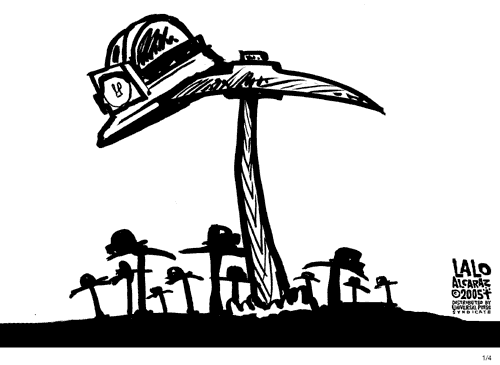
Mine Tragedy Highlights Decay of Regulations, Enforcement
by Brendan Coyne, NewStandard
The federal government and even the AFL-CIO have shifted attention away from workplace safety concerns at the national level in recent years, and labor says fines are just a slap on the wrist.
Jan 5 - While experts and government officials begin investigating the West Virginia mine accident that killed twelve men, organized labor groups and their allies are calling for renewed government action on workplace safety.
The Bush administration has weakened mine safety enforcement during its tenure. Meanwhile, the nation's largest labor federation has itself cut funds for health and safety advocacy and training.
As The NewStandard reported earlier this week, labor groups have criticized the Bush administration for cutting staff at the Mine Safety and Health Administration – the federal agency in charge of inspecting and enforcing mine safety.
Bush appointees have also eliminated regulations designed to protect miners. For instance, David Lauriski, a former mining-company official who was appointed to head the MSHA in 2001, altered a rule requiring mines to have at least two separate exit paths. The regulation is one of seventeen aimed at making mining less dangerous that the MSHA has undone since 2001, according to the government watchdog OMB Watch.
United Mine Workers of America Secretary-Treasurer Dan Kane told CNN yesterday that when considering official's commitment to enforcement, it's important to "look at the level of violations, the number of unwarrantable failures that were issued," but also "the amount of the fines."
According to the Mine Safety and Health Administration (MSHA) website, the agency issued 208 separate citations to the Sago mine totaling just under $25,000 in 2005. A spokesperson for the West Virginia Office of Miners' Safety and Health told the Associated Press that it had slapped owners of the mine with 144 citations of its own last year. Both the state and federal citations mark an increase over the previous year.
"In many cases," Kane told CNN, "fines are issued that amount to what you and I may pay for a speeding ticket out on the Beltway. Fines have to be incentives to enforce the law. We can't allow them to become just another cost of doing business to the coal company."
Of last year's Sago fines, most were for amounts less than $100, with a handful for amounts over $200, according to MSHA records. A single November 2005 inspection netted five separate violations of mine-roof regulations, including a $440 fine for failing to properly vent methane and dust particles. In a search of data dating to the beginning of 2004, such ventilation fines reappear frequently and account for many of the larger fines.
Methane and other particles commonly found in coal mines are known to be highly explosive in small concentrations.
Improper equipment maintenance and fire-suppression equipment violations were also prevalent at Sago over the past two years, with the last earning Sago its largest-assessed penalty during the period examined by TNS: $878 in April 2004, a fine that has yet to be paid.
According to the most-recent complete national data, MSHA issued 64,635 citations in 2004 for a total of $17 million at mines throughout the nation. Of those, just 59 were for amounts the Administration terms "high-dollar," meaning $10,000 or more, with the largest fine being $38,500. As of last night, only three of those 59 fines had been paid, for a total of $33,300.
In press statements, Labor Secretary Elaine Chao and acting MSHA head David Dye said MSHA is undertaking an investigation into the explosion. Dye stated that the investigation "will evaluate all aspects of the accident and response, including compliance with all federal health and safety standards, and how emergency information was relayed about the trapped miners' conditions."
No investigation by an independent body – and no inquiry into the MSHA's prior dealings with the Sago mine – has been announced.
Labor advocates have long accused the federal government of generally failing to take workers' health and safety seriously, noting that the number of workers killed or injured in the job in the US remains high.
According to the most recently available numbers from the Occupational Safety and Health Administration (OSHA), work-related incidents in the US took the lives of 5,559 workers and left another 4.4 million injured in 2003. The governmental department charged with overseeing labor-safety issues reported inspecting 23,625 incidents and over 50,000 hazardous conditions in 2004 through its offices and state programs it funds.
While the federal government eased mine safety regulations, the nation's largest conglomerate of unions, the AFL-CIO, controversially shuttered its own organization's health-and-safety office last year, cutting staff and folding it into a larger government-affairs office, as TNS reported in May.
"We don't know if Monday's mine explosion was related to the cited conditions, but it certainly is another in a long line of wake-up calls for increased government and industry attention to workers' safety on the job. Regardless of the cause, our nation's safety and health laws must be strengthened," AFl-CIO president John Sweeney said in a statement issued before the fate of the twelve West Virginia miners was known.
The federal government and even the AFL-CIO have shifted attention away from workplace safety concerns at the national level in recent years, and labor says fines are just a slap on the wrist.
Jan 5 - While experts and government officials begin investigating the West Virginia mine accident that killed twelve men, organized labor groups and their allies are calling for renewed government action on workplace safety.
The Bush administration has weakened mine safety enforcement during its tenure. Meanwhile, the nation's largest labor federation has itself cut funds for health and safety advocacy and training.
As The NewStandard reported earlier this week, labor groups have criticized the Bush administration for cutting staff at the Mine Safety and Health Administration – the federal agency in charge of inspecting and enforcing mine safety.
Bush appointees have also eliminated regulations designed to protect miners. For instance, David Lauriski, a former mining-company official who was appointed to head the MSHA in 2001, altered a rule requiring mines to have at least two separate exit paths. The regulation is one of seventeen aimed at making mining less dangerous that the MSHA has undone since 2001, according to the government watchdog OMB Watch.
United Mine Workers of America Secretary-Treasurer Dan Kane told CNN yesterday that when considering official's commitment to enforcement, it's important to "look at the level of violations, the number of unwarrantable failures that were issued," but also "the amount of the fines."
According to the Mine Safety and Health Administration (MSHA) website, the agency issued 208 separate citations to the Sago mine totaling just under $25,000 in 2005. A spokesperson for the West Virginia Office of Miners' Safety and Health told the Associated Press that it had slapped owners of the mine with 144 citations of its own last year. Both the state and federal citations mark an increase over the previous year.
"In many cases," Kane told CNN, "fines are issued that amount to what you and I may pay for a speeding ticket out on the Beltway. Fines have to be incentives to enforce the law. We can't allow them to become just another cost of doing business to the coal company."
Of last year's Sago fines, most were for amounts less than $100, with a handful for amounts over $200, according to MSHA records. A single November 2005 inspection netted five separate violations of mine-roof regulations, including a $440 fine for failing to properly vent methane and dust particles. In a search of data dating to the beginning of 2004, such ventilation fines reappear frequently and account for many of the larger fines.
Methane and other particles commonly found in coal mines are known to be highly explosive in small concentrations.
Improper equipment maintenance and fire-suppression equipment violations were also prevalent at Sago over the past two years, with the last earning Sago its largest-assessed penalty during the period examined by TNS: $878 in April 2004, a fine that has yet to be paid.
According to the most-recent complete national data, MSHA issued 64,635 citations in 2004 for a total of $17 million at mines throughout the nation. Of those, just 59 were for amounts the Administration terms "high-dollar," meaning $10,000 or more, with the largest fine being $38,500. As of last night, only three of those 59 fines had been paid, for a total of $33,300.
In press statements, Labor Secretary Elaine Chao and acting MSHA head David Dye said MSHA is undertaking an investigation into the explosion. Dye stated that the investigation "will evaluate all aspects of the accident and response, including compliance with all federal health and safety standards, and how emergency information was relayed about the trapped miners' conditions."
No investigation by an independent body – and no inquiry into the MSHA's prior dealings with the Sago mine – has been announced.
Labor advocates have long accused the federal government of generally failing to take workers' health and safety seriously, noting that the number of workers killed or injured in the job in the US remains high.
According to the most recently available numbers from the Occupational Safety and Health Administration (OSHA), work-related incidents in the US took the lives of 5,559 workers and left another 4.4 million injured in 2003. The governmental department charged with overseeing labor-safety issues reported inspecting 23,625 incidents and over 50,000 hazardous conditions in 2004 through its offices and state programs it funds.
While the federal government eased mine safety regulations, the nation's largest conglomerate of unions, the AFL-CIO, controversially shuttered its own organization's health-and-safety office last year, cutting staff and folding it into a larger government-affairs office, as TNS reported in May.
"We don't know if Monday's mine explosion was related to the cited conditions, but it certainly is another in a long line of wake-up calls for increased government and industry attention to workers' safety on the job. Regardless of the cause, our nation's safety and health laws must be strengthened," AFl-CIO president John Sweeney said in a statement issued before the fate of the twelve West Virginia miners was known.
BushCo Says, "Don't Fuck With Me, Mere Citizen"!
Jan 4, 2006
James Moore is an Emmy-winning former television news correspondent and the co-author of the bestselling, Bush's Brain: How Karl Rove Made George W. Bush Presidential. He has been writing and reporting from Texas for the past 25 years on the rise of Rove and Bush and has traveled extensively on every presidential campaign since 1976.
This author was placed on the no fly list.
Two points: there's nothing you or I can do to help him but make this public, and two- we are all targets here. This should make you scared and pissed at the same time. If it doesn't, check your pulse.
James Moore:
I have been on the No Fly Watch List for a year. I will never be told the official reason. No one ever is. You cannot sue to get the information. Nothing I have done has moved me any closer to getting off the list. There were 35,000 Americans in that database last year. According to a European government that screens hundreds of thousands of American travelers every year, the list they have been given to work from has since grown to 80,000.
Article...
James Moore is an Emmy-winning former television news correspondent and the co-author of the bestselling, Bush's Brain: How Karl Rove Made George W. Bush Presidential. He has been writing and reporting from Texas for the past 25 years on the rise of Rove and Bush and has traveled extensively on every presidential campaign since 1976.
This author was placed on the no fly list.
Two points: there's nothing you or I can do to help him but make this public, and two- we are all targets here. This should make you scared and pissed at the same time. If it doesn't, check your pulse.
James Moore:
"I made it a point to arrive very early at the airport. My reservation was confirmed before I left home. I went to the electronic kiosk and punched in my confirmation number to print out my boarding pass and luggage tags. Another error message appeared, "Please see agent."
I did. She took my Texas driver's license and punched in the relevant information to her computer system.
"I'm sorry, sir," she said. "There seems to be a problem. You've been placed on the No Fly Watch List."
"Excuse me?"
"I'm afraid there isn't much more that I can tell you," she explained. "It's just the list that's maintained by TSA to check for people who might have terrorist connections."
"You're serious?"
"I'm afraid so, sir. Here's an 800 number in Washington. You need to call them before I can clear you for the flight."
Exasperated, I dialed the number from my cell, determined to clear up what I was sure was a clerical error. The woman who answered offered me no more information than the ticket agent.
"Ma'am, I'd like to know how I got on the No Fly Watch List."
"I'm not really authorized to tell you that, sir," she explained after taking down my social security and Texas driver's license numbers.
"What can you tell me?"
"All I can tell you is that there is something in your background that in some way is similar to someone they are looking for."
"Well, let me get this straight then," I said. "Our government is looking for a guy who may have a mundane Anglo name, who pays tens of thousands of dollars every year in taxes, has never been arrested or even late on a credit card payment, is more uninteresting than a Tupperware party, and cries after the first two notes of the national anthem? We need to find this guy. He sounds dangerous to me."
"I'm sorry, sir, I've already told you everything I can."
"Oh, wait," I said. "One last thing: this guy they are looking for? Did he write books critical of the Bush administration, too?"
I have been on the No Fly Watch List for a year. I will never be told the official reason. No one ever is. You cannot sue to get the information. Nothing I have done has moved me any closer to getting off the list. There were 35,000 Americans in that database last year. According to a European government that screens hundreds of thousands of American travelers every year, the list they have been given to work from has since grown to 80,000.
Article...
The Mediacracy
GOVERNMENT PROPAGANDIST WORKED UNDER COVER FOR AP - PERHAPS NPR AND NY TIMES AS WELL
PR WATCH - "The Associated Press has terminated its relationship with a freelance reporter in Haiti after learning she was working for a U.S. government-sponsored organization," the National Endowment for Democracy. In October 2005, reporter Regine Alexandre began working for NED as a "part-time facilitator" between the U.S. organization and Haitian non-governmental organizations. After another journalist questioned the relationship, Alexandre "denied she was an employee." However, NED confirmed her employment, saying "it was unaware when it hired Alexandre that she worked for the AP or any other media organization." Alexandre has also reported for the New York Times and National Public Radio, though it's unclear whether she contributed to either while working for NED.
Article...
PR WATCH - "The Associated Press has terminated its relationship with a freelance reporter in Haiti after learning she was working for a U.S. government-sponsored organization," the National Endowment for Democracy. In October 2005, reporter Regine Alexandre began working for NED as a "part-time facilitator" between the U.S. organization and Haitian non-governmental organizations. After another journalist questioned the relationship, Alexandre "denied she was an employee." However, NED confirmed her employment, saying "it was unaware when it hired Alexandre that she worked for the AP or any other media organization." Alexandre has also reported for the New York Times and National Public Radio, though it's unclear whether she contributed to either while working for NED.
Article...
Wednesday, January 04, 2006
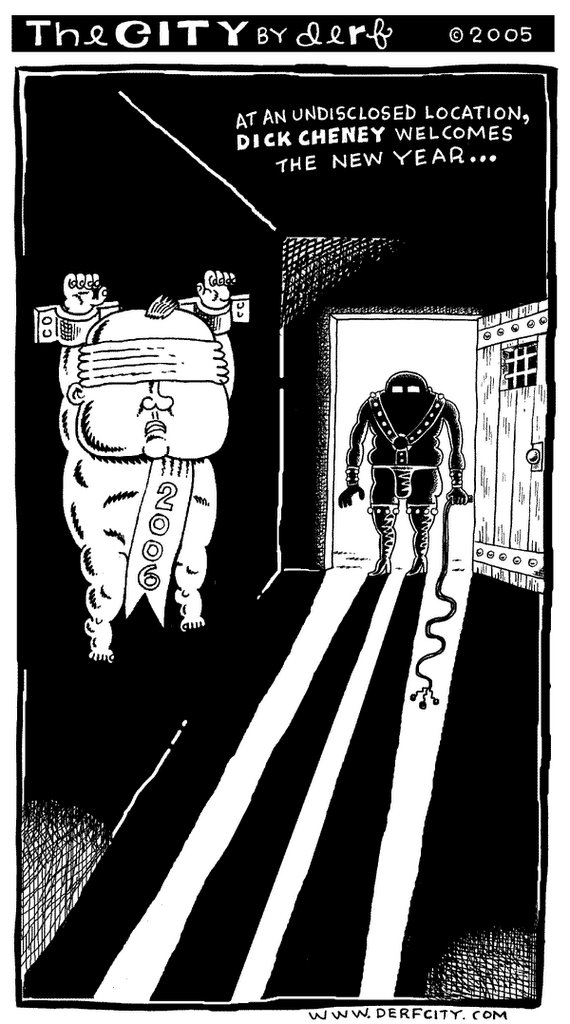
WHY BUSH'S SPYING ON YOU IS ILLEGAL
ACLU - According to the NY Times, Bush signed a presidential order in 2002 allowing the National Security Agency to monitor without a warrant the international (and sometimes domestic) telephone calls and e-mail messages of hundreds or thousands of citizens and legal residents inside the United States. The program eventually came to include some purely internal controls - but no requirement that warrants be obtained from the Foreign Intelligence Surveillance Court as the 4th Amendment to the Constitution and the foreign intelligence surveillance laws require.
In other words, no independent review or judicial oversight.
That kind of surveillance is illegal. Period.
The law governing government eavesdropping on American citizens is well-established and crystal clear. President Bush's claim that he is not bound by that law is simply astounding. It is a Presidential power grab that poses a challenge in the deepest sense to the integrity of the American system of government - the separation of powers between the legislative and executive branches, the concept of checks and balances on executive power, the notion that the president is subject to the law like everyone else, and the general respect for the "rule of law" on which our democratic system depends:
- Electronic surveillance by the government is strictly limited by the Constitution and federal Law
- There are only three laws that authorize any exceptions to the ban on electronic eavesdropping by the government. Congress has explicitly stated that these three laws are the exclusive means by which domestic electronic surveillance can be carried out.
- Congress's post-9/11 use-of-force resolution does not legitimize the Bush-NSA spying. That resolution contains no language changing, overriding or repealing any laws passed by Congress. Congress does not repeal legislation through hints and innuendos, and the authorization to Use Military Force does not authorize the president to violate the law against surveillance without a warrant any more than it authorizes him to carry out an armed robbery or seize control of Citibank in order to pay for operations against terrorists.
- The need for quick action does not justify an end-run around the courts The FISA law takes account of the need for emergency surveillance, and the need for quick action cannot be used as a rationale for going outside the law. FISA allows wiretapping without a court order in an emergency; the court must simply be notified within 72 hours. The government is aware of this emergency power and has used it repeatedly
Read More...
In other words, no independent review or judicial oversight.
That kind of surveillance is illegal. Period.
The law governing government eavesdropping on American citizens is well-established and crystal clear. President Bush's claim that he is not bound by that law is simply astounding. It is a Presidential power grab that poses a challenge in the deepest sense to the integrity of the American system of government - the separation of powers between the legislative and executive branches, the concept of checks and balances on executive power, the notion that the president is subject to the law like everyone else, and the general respect for the "rule of law" on which our democratic system depends:
- Electronic surveillance by the government is strictly limited by the Constitution and federal Law
- There are only three laws that authorize any exceptions to the ban on electronic eavesdropping by the government. Congress has explicitly stated that these three laws are the exclusive means by which domestic electronic surveillance can be carried out.
- Congress's post-9/11 use-of-force resolution does not legitimize the Bush-NSA spying. That resolution contains no language changing, overriding or repealing any laws passed by Congress. Congress does not repeal legislation through hints and innuendos, and the authorization to Use Military Force does not authorize the president to violate the law against surveillance without a warrant any more than it authorizes him to carry out an armed robbery or seize control of Citibank in order to pay for operations against terrorists.
- The need for quick action does not justify an end-run around the courts The FISA law takes account of the need for emergency surveillance, and the need for quick action cannot be used as a rationale for going outside the law. FISA allows wiretapping without a court order in an emergency; the court must simply be notified within 72 hours. The government is aware of this emergency power and has used it repeatedly
Read More...
ANNUAL REMINDER
We have just completed another year during which the vast majority of the media and our politicians have refused even to discuss the remedy to our fear of attack that is the cheapest, most effective, the least deadly, and least likely to ruin our constitution, democracy and national sanity - namely a positive change in our foreign policy. In fact, it is only remedy that is likely to work.
The course currently supported by our politicians and media is not only ineffective, it encourages the very terror it professes to oppose by enlarging and intensifying the constituency of those who despise our country
--Sam Smith
The course currently supported by our politicians and media is not only ineffective, it encourages the very terror it professes to oppose by enlarging and intensifying the constituency of those who despise our country
--Sam Smith
Sunday, January 01, 2006
Opposition Delays Free Trade Implementation
By Brendon Coyne, NewStandard
Stubborn opposition to provisions of the Central American Free Trade Agreement (CAFTA) will keep the pact from going into effect on the first of the year as planned by the Bush administration. The delay has enlivened efforts to undo the deal by groups who fear the pact could have a crippling effect on workers, small farmers and the economies of the nations involved.
As part of the proposed pact, which the US House of Representatives approved by only two votes this summer, the US requires the participating nations to enact reforms that appear to favor corporations over individuals. Opponents of CAFTA warn it could lead to greater economic disparity, reduced worker rights, and fewer public services in participating countries. They also fear it could devastate the already-precarious situation of small farmers throughout the Western hemisphere.
Many of the six smaller states – the Dominican Republic, Guatemala, Nicaragua, El Salvador, Honduras and Costa Rica – have failed to come into full compliance with CAFTA's requirements on the treatment of foreign companies, customs laws, telecommunications services, public-health services and other matters. In addition, Costa Rica has yet to approve the deal.
News of CAFTA's troubles has sparked renewed hope among opponents that the deal could be significantly altered or ultimately fall apart. In a statement yesterday, the Committee in Solidarity with the People of El Salvador (CISPES), a US-based grassroots group that opposes free trade, joined with the Quixote Center, a nondenominational humanitarian organization, in heralding the delay in CAFTA's launch.
"From day one the Bush administration has been trying to ram CAFTA down people's throats, with little substantive debate and despite voices of tremendous opposition," CISPES member Burke Stanbury said. "In Costa Rica they have failed, and in other countries it took repression and dirty tactics to ratify CAFTA. But just as Central American social movements continue to resist the imposition of this devastating agreement, we too are not giving up."
Tuesday, the Dominican Republic announced that it would hold off on entering into the trade pact until July.
Other potential CAFTA trade-partner states are facing similar situations, with El Salvador, the nation closest to compliance, recently stating that it will not be ready to join CAFTA until February at the earliest, the CISPES-Quixote Center statement noted.
"The problems associated with implementing CAFTA demonstrate what we've been saying all along: this agreement goes beyond trade in requiring dramatic changes in domestic laws that grant new rights to transnational corporations at the expense of working people," the Quixote Center's Tom Ricker said. "The fact that legislatures throughout Central America and in the Dominican Republic are now struggling to change laws governing intellectual property, services, and investment – in order to receive US certification for joining CAFTA – makes clear the undemocratic nature of this agreement."
Domestic opposition to CAFTA in the United States is varied, with labor and public-interest groups taking the lead in working against the measure and some economic analysts predicting that it could be especially disastrous for small farmers.
In light of the news of CAFTA's delay, a broad coalition of domestic and international groups is mobilizing to undo the trade deal once and for all. In statements and notices posted to its website, the Stop CAFTA Coalition calls for demonstrations against the pact throughout January and provides links and information for interested parties. Planned activities include pickets, petition signings, teach-ins and workshops.
Business and trade groups overwhelmingly support CAFTA. The American Farm Bureau Federation expects CAFTA will bring in about $1.5 billion a year in export sales. In a recent update, the National Association of Manufacturers said the pact will "level the playing field for manufacturers, boost exports and create jobs."
But in interviews with The NewStandard, CAFTA's critics in the US say that large agribusinesses stand to benefit from the deal at the expense of smaller producers. They have also questioned optimistic export predictions, noting that economies of Central America and the Dominican Republic are simply too small to consume such a significant amount of US exports.
In a statement earlier this month, the US Trade Representative spokesperson Christin Baker said the office would make an official announcement of CAFTA's status on January 1 and is ready to put the agreement into effect with nations on a "rolling basis" as they implement required reforms.
"We will move forward as long as at least one country is prepared, and will accommodate new entrants as they become ready," Baker said. "We want to reward countries as they become ready and look forward to continued progress with the others. Countries can continue to enjoy existing preferences while they work with the United States to come on board."
Article...
Stubborn opposition to provisions of the Central American Free Trade Agreement (CAFTA) will keep the pact from going into effect on the first of the year as planned by the Bush administration. The delay has enlivened efforts to undo the deal by groups who fear the pact could have a crippling effect on workers, small farmers and the economies of the nations involved.
As part of the proposed pact, which the US House of Representatives approved by only two votes this summer, the US requires the participating nations to enact reforms that appear to favor corporations over individuals. Opponents of CAFTA warn it could lead to greater economic disparity, reduced worker rights, and fewer public services in participating countries. They also fear it could devastate the already-precarious situation of small farmers throughout the Western hemisphere.
Many of the six smaller states – the Dominican Republic, Guatemala, Nicaragua, El Salvador, Honduras and Costa Rica – have failed to come into full compliance with CAFTA's requirements on the treatment of foreign companies, customs laws, telecommunications services, public-health services and other matters. In addition, Costa Rica has yet to approve the deal.
News of CAFTA's troubles has sparked renewed hope among opponents that the deal could be significantly altered or ultimately fall apart. In a statement yesterday, the Committee in Solidarity with the People of El Salvador (CISPES), a US-based grassroots group that opposes free trade, joined with the Quixote Center, a nondenominational humanitarian organization, in heralding the delay in CAFTA's launch.
"From day one the Bush administration has been trying to ram CAFTA down people's throats, with little substantive debate and despite voices of tremendous opposition," CISPES member Burke Stanbury said. "In Costa Rica they have failed, and in other countries it took repression and dirty tactics to ratify CAFTA. But just as Central American social movements continue to resist the imposition of this devastating agreement, we too are not giving up."
Tuesday, the Dominican Republic announced that it would hold off on entering into the trade pact until July.
Other potential CAFTA trade-partner states are facing similar situations, with El Salvador, the nation closest to compliance, recently stating that it will not be ready to join CAFTA until February at the earliest, the CISPES-Quixote Center statement noted.
"The problems associated with implementing CAFTA demonstrate what we've been saying all along: this agreement goes beyond trade in requiring dramatic changes in domestic laws that grant new rights to transnational corporations at the expense of working people," the Quixote Center's Tom Ricker said. "The fact that legislatures throughout Central America and in the Dominican Republic are now struggling to change laws governing intellectual property, services, and investment – in order to receive US certification for joining CAFTA – makes clear the undemocratic nature of this agreement."
Domestic opposition to CAFTA in the United States is varied, with labor and public-interest groups taking the lead in working against the measure and some economic analysts predicting that it could be especially disastrous for small farmers.
In light of the news of CAFTA's delay, a broad coalition of domestic and international groups is mobilizing to undo the trade deal once and for all. In statements and notices posted to its website, the Stop CAFTA Coalition calls for demonstrations against the pact throughout January and provides links and information for interested parties. Planned activities include pickets, petition signings, teach-ins and workshops.
Business and trade groups overwhelmingly support CAFTA. The American Farm Bureau Federation expects CAFTA will bring in about $1.5 billion a year in export sales. In a recent update, the National Association of Manufacturers said the pact will "level the playing field for manufacturers, boost exports and create jobs."
But in interviews with The NewStandard, CAFTA's critics in the US say that large agribusinesses stand to benefit from the deal at the expense of smaller producers. They have also questioned optimistic export predictions, noting that economies of Central America and the Dominican Republic are simply too small to consume such a significant amount of US exports.
In a statement earlier this month, the US Trade Representative spokesperson Christin Baker said the office would make an official announcement of CAFTA's status on January 1 and is ready to put the agreement into effect with nations on a "rolling basis" as they implement required reforms.
"We will move forward as long as at least one country is prepared, and will accommodate new entrants as they become ready," Baker said. "We want to reward countries as they become ready and look forward to continued progress with the others. Countries can continue to enjoy existing preferences while they work with the United States to come on board."
Article...
Friday, December 30, 2005
Letter To A Spook
BUT YOU DON'T KNOW ME
Sam Smith
I don't know for sure that you're out there at all, but from what I read and hear there's a pretty good chance, so I thought I would pass this along.
You may be tapping my phone, scanning my e-mails and collating my other electronic ephemera, but you don't know me.
Any writer can tell you this: you don't reveal character or describe an individual by just dumpster diving for data. Your efforts are not only intrusive, they're ineffective as well.
An individual is a product of experiences, some of which - though influential - may have been lost to memory, some of which - though searing - may never be mentioned again, and some of which - though exhilarating - may lack the words to describe them.
You are eavesdropping only on my front to the world. If I am down, I try not to bring my friends down with me. If I am mad about some public act, I try not to bore my friends too much about it. If I am mad about some private act, I try for the calm and restraint I do not feel. If I am really happy, I often lack the words to express it well. And if I have been given something, I try for gratitude even though I have no idea what to do with the damn thing.
You do not know my dreams, my fears, my stupid excesses of doubt, or how I alternately rebel against, resent or am resigned to the entropy of aging. You do not know how sad I am about the world that the people you work for will leave my children and their children. You do not know that I do not like vinegar, have never read Joyce's "Ulysses," sometimes fall asleep while waiting my turn in a board game, never watch football, or that two of my uncles were killed in wartime service to our country. You do not know that my utopia would have, above all, no need for dentists as well having "This Land is My Land" as our national anthem.
If you were to really know me, you would need to hear hundreds of stories, visit hundreds of places, and meet hundreds of people. Only a few of them are listed on my credit cards.
But you are not only misinformed. You are also a thief. You are stealing my privacy, my civil liberties, my peace of mind, and the incalculable pleasure of not having to worry about what someone else is doing to you.
You are also a vandal. You are throwing rocks at the Constitution, scrawling graffiti on our national conscience, wrecking our reputation, and scratching the face of America.
And still you do not know me.
I don't know you either but I suspect you are earnest and were attracted to your dubious trade by its romantic and macho aura, recruited by the excitement of being a spy. Deceived by your employers, however, you have ended up just another technician in the dismantling of the First American Republic.
I believe you sincerely believe the contrary but I wonder about some things. For example, how many courses in American history did you take before embarking on this task? Did you ever read Benjamin Franklin's autobiography? Do you know who Thomas Paine was? What do you think Patrick Henry meant when he said, "Give me liberty or give me death?" Would you have tapped his phone, too?
And what about those who rebelled against the law to win rights for slaves, for women, for workers? Many of them broke the law. Were they bad Americans because they sought to become full Americans?
Do you know what the Palmer raids were? Do know why good Americans stood up to Joseph McCarthy? What did Woodrow Wilson mean when he told a group of new citizens "You have just taken an oath of allegiance to the United States. Of allegiance to whom? Of allegiance to no one, unless it be God. Certainly not of allegiance to those who temporarily represent this great government. You have taken an oath of allegiance to a great ideal, to a great body of principles, to a great hope of the human race." What are some of those principles? Did Wilson know what he was talking about or should he have been under surveillance, too?
If you have a hard time with these questions, maybe you're in the wrong business. You're judging people without knowing the rules of the game. You're determining who is a good American without knowing what that means. You're mistaking loyalty to the ambitions of a particular set of politicians at a particular moment as loyalty to a country, its land and its people.
But even though you are a thief and a vandal, and even though I suspect you don't know enough about America to judge me fairly, I'll make a deal with you.
You come out of your hole long enough to meet me someplace over a drink or over dinner. I'll tell you my stories and you tell me yours. No interrogation, no tape recorder, no probing into each other's private business. Just two Americans sitting and talking about what it means to them to be an American.
If you don't take this deal, I'll think of you not only as thief and vandal but as a coward as well.
If you do take this deal, you'll probably discover that we're both pretty good Americans, that you've been wasting your time, and that you may even want to find a new job.
Sam Smith
I don't know for sure that you're out there at all, but from what I read and hear there's a pretty good chance, so I thought I would pass this along.
You may be tapping my phone, scanning my e-mails and collating my other electronic ephemera, but you don't know me.
Any writer can tell you this: you don't reveal character or describe an individual by just dumpster diving for data. Your efforts are not only intrusive, they're ineffective as well.
An individual is a product of experiences, some of which - though influential - may have been lost to memory, some of which - though searing - may never be mentioned again, and some of which - though exhilarating - may lack the words to describe them.
You are eavesdropping only on my front to the world. If I am down, I try not to bring my friends down with me. If I am mad about some public act, I try not to bore my friends too much about it. If I am mad about some private act, I try for the calm and restraint I do not feel. If I am really happy, I often lack the words to express it well. And if I have been given something, I try for gratitude even though I have no idea what to do with the damn thing.
You do not know my dreams, my fears, my stupid excesses of doubt, or how I alternately rebel against, resent or am resigned to the entropy of aging. You do not know how sad I am about the world that the people you work for will leave my children and their children. You do not know that I do not like vinegar, have never read Joyce's "Ulysses," sometimes fall asleep while waiting my turn in a board game, never watch football, or that two of my uncles were killed in wartime service to our country. You do not know that my utopia would have, above all, no need for dentists as well having "This Land is My Land" as our national anthem.
If you were to really know me, you would need to hear hundreds of stories, visit hundreds of places, and meet hundreds of people. Only a few of them are listed on my credit cards.
But you are not only misinformed. You are also a thief. You are stealing my privacy, my civil liberties, my peace of mind, and the incalculable pleasure of not having to worry about what someone else is doing to you.
You are also a vandal. You are throwing rocks at the Constitution, scrawling graffiti on our national conscience, wrecking our reputation, and scratching the face of America.
And still you do not know me.
I don't know you either but I suspect you are earnest and were attracted to your dubious trade by its romantic and macho aura, recruited by the excitement of being a spy. Deceived by your employers, however, you have ended up just another technician in the dismantling of the First American Republic.
I believe you sincerely believe the contrary but I wonder about some things. For example, how many courses in American history did you take before embarking on this task? Did you ever read Benjamin Franklin's autobiography? Do you know who Thomas Paine was? What do you think Patrick Henry meant when he said, "Give me liberty or give me death?" Would you have tapped his phone, too?
And what about those who rebelled against the law to win rights for slaves, for women, for workers? Many of them broke the law. Were they bad Americans because they sought to become full Americans?
Do you know what the Palmer raids were? Do know why good Americans stood up to Joseph McCarthy? What did Woodrow Wilson mean when he told a group of new citizens "You have just taken an oath of allegiance to the United States. Of allegiance to whom? Of allegiance to no one, unless it be God. Certainly not of allegiance to those who temporarily represent this great government. You have taken an oath of allegiance to a great ideal, to a great body of principles, to a great hope of the human race." What are some of those principles? Did Wilson know what he was talking about or should he have been under surveillance, too?
If you have a hard time with these questions, maybe you're in the wrong business. You're judging people without knowing the rules of the game. You're determining who is a good American without knowing what that means. You're mistaking loyalty to the ambitions of a particular set of politicians at a particular moment as loyalty to a country, its land and its people.
But even though you are a thief and a vandal, and even though I suspect you don't know enough about America to judge me fairly, I'll make a deal with you.
You come out of your hole long enough to meet me someplace over a drink or over dinner. I'll tell you my stories and you tell me yours. No interrogation, no tape recorder, no probing into each other's private business. Just two Americans sitting and talking about what it means to them to be an American.
If you don't take this deal, I'll think of you not only as thief and vandal but as a coward as well.
If you do take this deal, you'll probably discover that we're both pretty good Americans, that you've been wasting your time, and that you may even want to find a new job.
Tuesday, December 27, 2005
The I-Word is Gaining Ground
http://www.thenation.com/blogs/edcut?bid=7&pid=45006
In 1998, House Majority Whip Tom DeLay, currently under indictment on corruption charges, proclaimed: "This nation sits at a crossroads. One direction points to the higher road of the rule of law...The other road is the path of least resistance" in which "we pitch the law completely overboard when the mood fits us...[and] close our eyes to the potential lawbreaking...and tear an unfixable hole in our legal system." That arbiter of moral politics was incensed about the possibility of Bill Clinton escaping unpunished for his "crimes."
Fast forward to December 2005. Not one official in the entire Bush Administration has been fired or indicted, not to mention impeached, for the shedding of American blood in Iraq or for the shredding of our Constitution at home. As Newsweek columnist Jonathan Alter put it--hours after the New York Times reported that Bush had authorized NSA wiretapping of US citizens without judicial warrants--this President has committed a real transgression that "goes beyond sex, corruption and political intrigue to big issues like security versus liberty and the reasonable bounds of presidential power."
In the last months, several organizations, including AfterDowningStreet, Impeach Central and ImpeachPAC.org, have formed to urge Bush's impeachment. But until very recently, their views were virtually absent in the so-called "liberal" MSM, and could only be found on the Internet and in street protests.
But the times they are a' changin'. The I-word has moved from the marginal to the mainstream--although columnists like Charles "torture-is-fine-by-me" Krauthammer would like us to believe that "only the most brazen and reckless and partisan" could support the idea. In fact, as Michelle Goldberg reports in Salon, "in the past few days, impeachment "has become a topic of considered discussion among constitutional scholars and experts (including a few Republicans), former intelligence officers, and even a few politicians." Even a moderately liberal columnist like Newsweek's Alter sounds like The Nation, observing: "We're seeing clearly now that Bush thought 9/11 gave him license to act like a dictator."
As Editor & Publisher recently reported, the idea of impeaching Bush has entered the mainstream media's circulatory system--with each day producing more op-eds and articles on the subject. Joining the chorus on Christmas Eve, conservative business magazine Barron's published a lengthy editorial excoriating the president for committing a potentially impeachable offense. "If we don't discuss the program and lack of authority of it," wrote Barron's editorial page editor Thomas Donlan, "we are meeting the enemy--in the mirror."
Public opinion is also growing more comfortable with the idea of impeaching this president. A Zogby International poll conducted this summer found that 42 percent of Americans felt that impeaching Bush would be justified if it was shown that he had manipulated intelligence in going to war in Iraq. (John Zogby admitted that "it was much higher than I expected.") By November, the number of those who favored impeaching Bush stood at 53 percent--if it was in fact proven that Bush had lied about the basis for invading Iraq. (And these polls were taken before the revelations of Bush's domestic spying.)
For those interested in some of the most compelling charges against the president, I offer a brief summary:
* Former Nixon White House counsel John Dean argued in his aptly-named book Worse than Watergate that Bush's false statements about WMDs in Iraq--used to drum up support for an invasion--deceived the American people and Congress. This constituted "an impeachable offense," Dean told PBS' Bill Moyers in 2004. "I think the case is overwhelming that these people presented false information to the Congress and to the American people." Bush's actions were actually far worse than Watergate, Dean contends, because "no one died for Nixon's so-called Watergate abuses."
Lending credence to Dean's arguments, the Downing Street Memo revealed that Britain's MI-6 Director Richard Dearlove had told Tony Blair that "the intelligence and facts were being fixed around the policy" by the Bush Administration. John Bonifaz, a Boston-based attorney and constitutional law expert, said that Bush seemingly "concealed important intelligence which he ought to have communicated," and "must certainly be punished for giving false information to the Senate." Bush deceived "the American people as to the basis for taking the nation into war against Iraq," Bonifaz argued--an impeachable offense.
* Rep. John Conyers argued as well that the president committed impeachable offenses" because he and senior administration officials "countenanced torture and cruel, inhuman and degrading treatment in Iraq" at Abu Ghraib, and elsewhere, including Guantanamo Bay and the now-notorious "black sites" around the world.
* The most compelling evidence of Bush's high crimes and misdemeanors is the revelation that he repeatedly authorized NSA spying on US citizens without obtaining the required warrants from the Foreign Intelligence Surveillance court. Constitutional experts, politicians and ex-intelligence experts agree that Bush "committed a federal crime by wiretapping Americans." Rep. John Lewis--"the first major House figure to suggest impeaching Bush," said the AP--argued that the president "deliberately, systematically violated the law" in authorizing the wiretapping. Lewis added: "He is not King, he is president."
Meanwhile, Professor Jonathan Turley of George Washington University School of Law--a specialist in surveillance law--told Knight Ridder that Bush's actions "violated federal law" and raised "serious constitutional questions of high crimes and misdemeanors." It is worth remembering that an abuse of power similar to Bush's NSA wiretapping decision was part of the impeachment charge brought against Richard Nixon in 1974. [This comparison was brought home in the ACLU's powerful full page ad in the NYT of December 22nd.]
There are many reasons why it is crucial that the Democrats regain control of Congress in '06, but consider this one: If they do, there may be articles of impeachment introduced and the estimable John Conyers, who has led the fight to defend our constitution, would become Chair of the House Judiciary Committee. Wouldn't that be a truly just response to the real high crimes and misdemeanors that this lawbreaking president has so clearly committed?
In 1998, House Majority Whip Tom DeLay, currently under indictment on corruption charges, proclaimed: "This nation sits at a crossroads. One direction points to the higher road of the rule of law...The other road is the path of least resistance" in which "we pitch the law completely overboard when the mood fits us...[and] close our eyes to the potential lawbreaking...and tear an unfixable hole in our legal system." That arbiter of moral politics was incensed about the possibility of Bill Clinton escaping unpunished for his "crimes."
Fast forward to December 2005. Not one official in the entire Bush Administration has been fired or indicted, not to mention impeached, for the shedding of American blood in Iraq or for the shredding of our Constitution at home. As Newsweek columnist Jonathan Alter put it--hours after the New York Times reported that Bush had authorized NSA wiretapping of US citizens without judicial warrants--this President has committed a real transgression that "goes beyond sex, corruption and political intrigue to big issues like security versus liberty and the reasonable bounds of presidential power."
In the last months, several organizations, including AfterDowningStreet, Impeach Central and ImpeachPAC.org, have formed to urge Bush's impeachment. But until very recently, their views were virtually absent in the so-called "liberal" MSM, and could only be found on the Internet and in street protests.
But the times they are a' changin'. The I-word has moved from the marginal to the mainstream--although columnists like Charles "torture-is-fine-by-me" Krauthammer would like us to believe that "only the most brazen and reckless and partisan" could support the idea. In fact, as Michelle Goldberg reports in Salon, "in the past few days, impeachment "has become a topic of considered discussion among constitutional scholars and experts (including a few Republicans), former intelligence officers, and even a few politicians." Even a moderately liberal columnist like Newsweek's Alter sounds like The Nation, observing: "We're seeing clearly now that Bush thought 9/11 gave him license to act like a dictator."
As Editor & Publisher recently reported, the idea of impeaching Bush has entered the mainstream media's circulatory system--with each day producing more op-eds and articles on the subject. Joining the chorus on Christmas Eve, conservative business magazine Barron's published a lengthy editorial excoriating the president for committing a potentially impeachable offense. "If we don't discuss the program and lack of authority of it," wrote Barron's editorial page editor Thomas Donlan, "we are meeting the enemy--in the mirror."
Public opinion is also growing more comfortable with the idea of impeaching this president. A Zogby International poll conducted this summer found that 42 percent of Americans felt that impeaching Bush would be justified if it was shown that he had manipulated intelligence in going to war in Iraq. (John Zogby admitted that "it was much higher than I expected.") By November, the number of those who favored impeaching Bush stood at 53 percent--if it was in fact proven that Bush had lied about the basis for invading Iraq. (And these polls were taken before the revelations of Bush's domestic spying.)
For those interested in some of the most compelling charges against the president, I offer a brief summary:
* Former Nixon White House counsel John Dean argued in his aptly-named book Worse than Watergate that Bush's false statements about WMDs in Iraq--used to drum up support for an invasion--deceived the American people and Congress. This constituted "an impeachable offense," Dean told PBS' Bill Moyers in 2004. "I think the case is overwhelming that these people presented false information to the Congress and to the American people." Bush's actions were actually far worse than Watergate, Dean contends, because "no one died for Nixon's so-called Watergate abuses."
Lending credence to Dean's arguments, the Downing Street Memo revealed that Britain's MI-6 Director Richard Dearlove had told Tony Blair that "the intelligence and facts were being fixed around the policy" by the Bush Administration. John Bonifaz, a Boston-based attorney and constitutional law expert, said that Bush seemingly "concealed important intelligence which he ought to have communicated," and "must certainly be punished for giving false information to the Senate." Bush deceived "the American people as to the basis for taking the nation into war against Iraq," Bonifaz argued--an impeachable offense.
* Rep. John Conyers argued as well that the president committed impeachable offenses" because he and senior administration officials "countenanced torture and cruel, inhuman and degrading treatment in Iraq" at Abu Ghraib, and elsewhere, including Guantanamo Bay and the now-notorious "black sites" around the world.
* The most compelling evidence of Bush's high crimes and misdemeanors is the revelation that he repeatedly authorized NSA spying on US citizens without obtaining the required warrants from the Foreign Intelligence Surveillance court. Constitutional experts, politicians and ex-intelligence experts agree that Bush "committed a federal crime by wiretapping Americans." Rep. John Lewis--"the first major House figure to suggest impeaching Bush," said the AP--argued that the president "deliberately, systematically violated the law" in authorizing the wiretapping. Lewis added: "He is not King, he is president."
Meanwhile, Professor Jonathan Turley of George Washington University School of Law--a specialist in surveillance law--told Knight Ridder that Bush's actions "violated federal law" and raised "serious constitutional questions of high crimes and misdemeanors." It is worth remembering that an abuse of power similar to Bush's NSA wiretapping decision was part of the impeachment charge brought against Richard Nixon in 1974. [This comparison was brought home in the ACLU's powerful full page ad in the NYT of December 22nd.]
There are many reasons why it is crucial that the Democrats regain control of Congress in '06, but consider this one: If they do, there may be articles of impeachment introduced and the estimable John Conyers, who has led the fight to defend our constitution, would become Chair of the House Judiciary Committee. Wouldn't that be a truly just response to the real high crimes and misdemeanors that this lawbreaking president has so clearly committed?
A Time to Impeach
By Doug Ireland, Direland
Posted on December 20, 2005
http://www.alternet.org/story/29826/
When the U.S. Senate last Friday refused to renew the liberticidal Patriot Act -- with its provisions for spying on Americans' use of libraries and the Internet, among other Constitution-shredding provisions of that iniquitous law -- it was in part because that morning's New York Times had revealed how Bush and his White House had committed a major crime.
By ordering the National Security Agency -- the N.S.A, so secretive that in Washington its initials are said to stand for "No Such Agency" -- to wiretap and eavesdrop on thousands of American citizens without a court order, Bush committed actions specifically forbidden by the Foreign Intelligence Surveillance Act (FISA). Passed in 1978 after the Senate's Church Committee documented in detail the Nixon administration's widespread use of U.S. intelligence agencies to spy on the anti-Vietnam war movement and other political dissidents, FISA "expressly made it a crime for government officials 'acting under color of law' to engage in electronic eavesdropping 'other than pursuant to statute.'", as the director of the Center for National Security Studies, Kate Martin, told the Washington Post this past weekend.
And the FISA statute required authorization of the secret Foreign Intelligence Surveillance Court to make such domestic spying legal. Bush and his NSA sought no such authorization before invading American citizens' right to privacy -- a blatant flouting of the law that made both wavering Democrats and libertarian Republicans mad enough to vote against extending the hideous Patriot Act, which thankfully will now expire at the end of the year.
Bush not only acknowledged, and defended, this illegal eavesdropping in a Saturday radio address, he went further in a Monday morning press conference, saying he'd "suggested" it. But as Wisconsin Democratic Senator Russ Feingold -- who, together with conservative Idaho Republican Larry Craig, led the filibuster that defeated the Patriot Act's renewal -- said this weekend, "This is not how our democratic system of government works--the president does not get to pick and choose which laws he wants to follow."
But Bush had plenty of bipartisan help from Democratic co-conspirators in keeping knowledge of this illegal spying from reaching the American public. It began in November 2001, in the wake of 9/11, and -- from the very first briefing for Congressional leaders by Dick Cheney until today -- Democrats on the Senate and House Intelligence Committees were told about it. Those witting and complicit in hiding the crime included Democratic Senator John D. Rockefeller IV, former chairman and later ranking member of the Senate Intelligence Committee, and House Minority Leader Nancy Pelosi, former ranking member on the House Intelligence Committee. They knew it was a crime -- Rockefeller, for example, warned the administration against it -- and yet did not make it public. They were frightened by polls showing security hysteria at its height.
Worse, the New York Times itself was part of the coverup. When it broke its scoop last Friday, the Times in its article admitted that, "After meeting with senior administration officials to hear their concerns, the newspaper delayed publication for a year to conduct additional reporting. Some information that administration officials argued could be useful to terrorists has been omitted."
In other words, the Times sat on its story until after the 2004 presidential elections, when American voters might have been able to stop this criminal conduct by voting out the criminal. Not content with employing Judith Miller as the megaphone for relaying the Bush administration's lies about Saddam's having weapons of mass destruction, the Times again proved its servility to power by not telling its readers it knew of criminal spying on them for an entire year, until the election cycle was long past. Yet this aspect of the Times' story has gone unremarked in the mass media.
Bush's excuses for the illegal eavesdropping are indeed risible. The Times didn't mention it, but of 19,000 requests for eavesdropping the Federal Intelligence Security Court has received from the Executive Branch since 1979, only five have ever been refused. Bush claimed again on Monday that this flagrant flouting of the FISA law was necessary because fighting "terrorists" needed to be done "quickly." Yet, as the Times reported, the secret court can grant approval for wiretaps "within hours."
And the excuse Bush offered Monday morning that this illegal subversion of FISA was necessary to prevent 9/11-style terrorism is equally laughable. As the ACLU pointed out in a study of FISA two years ago, "Although the Patriot Act was rushed into law just weeks after 9/11, Congress's later investigation into the attacks did not find that the former limits on FISA powers had contributed to the government's failure to prevent the attacks."
A Zogby poll released Nov. 4 showed that, when asked if they agreed that, "If President Bush did not tell the truth about his reasons for going to war with Iraq, Congress should consider holding him accountable through impeachment," Americans answered yes by 53 percent to 42 percent. It is therefore not simply extremist raving to suggest that impeachment of George Bush should be put on the table.
Remember that, in the impeachment of Richard Nixon, Article 2 of the three Articles of Impeachment dealt with illegal wiretapping of Americans. It said that Nixon committed a crime "by directing or authorizing [intelligence] agencies or personnel to conduct or continue electronic surveillance or other investigations for purposes unrelated to national security, the enforcement of laws, or any other lawful function of his office."
There was no national security justification for Bush's illegal NSA wiretaps -- which could easily have been instituted by following the FISA law's provisions -- and, instead of being related to "enforcement of laws," Bush's eavesdropping was indisputably in contravention of the law of the land.
And when a president commits a crime in violation of his oath of office swearing to uphold the law, it is time to impeach.
Doug Ireland writes the blog, Direland.
Posted on December 20, 2005
http://www.alternet.org/story/29826/
When the U.S. Senate last Friday refused to renew the liberticidal Patriot Act -- with its provisions for spying on Americans' use of libraries and the Internet, among other Constitution-shredding provisions of that iniquitous law -- it was in part because that morning's New York Times had revealed how Bush and his White House had committed a major crime.
By ordering the National Security Agency -- the N.S.A, so secretive that in Washington its initials are said to stand for "No Such Agency" -- to wiretap and eavesdrop on thousands of American citizens without a court order, Bush committed actions specifically forbidden by the Foreign Intelligence Surveillance Act (FISA). Passed in 1978 after the Senate's Church Committee documented in detail the Nixon administration's widespread use of U.S. intelligence agencies to spy on the anti-Vietnam war movement and other political dissidents, FISA "expressly made it a crime for government officials 'acting under color of law' to engage in electronic eavesdropping 'other than pursuant to statute.'", as the director of the Center for National Security Studies, Kate Martin, told the Washington Post this past weekend.
And the FISA statute required authorization of the secret Foreign Intelligence Surveillance Court to make such domestic spying legal. Bush and his NSA sought no such authorization before invading American citizens' right to privacy -- a blatant flouting of the law that made both wavering Democrats and libertarian Republicans mad enough to vote against extending the hideous Patriot Act, which thankfully will now expire at the end of the year.
Bush not only acknowledged, and defended, this illegal eavesdropping in a Saturday radio address, he went further in a Monday morning press conference, saying he'd "suggested" it. But as Wisconsin Democratic Senator Russ Feingold -- who, together with conservative Idaho Republican Larry Craig, led the filibuster that defeated the Patriot Act's renewal -- said this weekend, "This is not how our democratic system of government works--the president does not get to pick and choose which laws he wants to follow."
But Bush had plenty of bipartisan help from Democratic co-conspirators in keeping knowledge of this illegal spying from reaching the American public. It began in November 2001, in the wake of 9/11, and -- from the very first briefing for Congressional leaders by Dick Cheney until today -- Democrats on the Senate and House Intelligence Committees were told about it. Those witting and complicit in hiding the crime included Democratic Senator John D. Rockefeller IV, former chairman and later ranking member of the Senate Intelligence Committee, and House Minority Leader Nancy Pelosi, former ranking member on the House Intelligence Committee. They knew it was a crime -- Rockefeller, for example, warned the administration against it -- and yet did not make it public. They were frightened by polls showing security hysteria at its height.
Worse, the New York Times itself was part of the coverup. When it broke its scoop last Friday, the Times in its article admitted that, "After meeting with senior administration officials to hear their concerns, the newspaper delayed publication for a year to conduct additional reporting. Some information that administration officials argued could be useful to terrorists has been omitted."
In other words, the Times sat on its story until after the 2004 presidential elections, when American voters might have been able to stop this criminal conduct by voting out the criminal. Not content with employing Judith Miller as the megaphone for relaying the Bush administration's lies about Saddam's having weapons of mass destruction, the Times again proved its servility to power by not telling its readers it knew of criminal spying on them for an entire year, until the election cycle was long past. Yet this aspect of the Times' story has gone unremarked in the mass media.
Bush's excuses for the illegal eavesdropping are indeed risible. The Times didn't mention it, but of 19,000 requests for eavesdropping the Federal Intelligence Security Court has received from the Executive Branch since 1979, only five have ever been refused. Bush claimed again on Monday that this flagrant flouting of the FISA law was necessary because fighting "terrorists" needed to be done "quickly." Yet, as the Times reported, the secret court can grant approval for wiretaps "within hours."
And the excuse Bush offered Monday morning that this illegal subversion of FISA was necessary to prevent 9/11-style terrorism is equally laughable. As the ACLU pointed out in a study of FISA two years ago, "Although the Patriot Act was rushed into law just weeks after 9/11, Congress's later investigation into the attacks did not find that the former limits on FISA powers had contributed to the government's failure to prevent the attacks."
A Zogby poll released Nov. 4 showed that, when asked if they agreed that, "If President Bush did not tell the truth about his reasons for going to war with Iraq, Congress should consider holding him accountable through impeachment," Americans answered yes by 53 percent to 42 percent. It is therefore not simply extremist raving to suggest that impeachment of George Bush should be put on the table.
Remember that, in the impeachment of Richard Nixon, Article 2 of the three Articles of Impeachment dealt with illegal wiretapping of Americans. It said that Nixon committed a crime "by directing or authorizing [intelligence] agencies or personnel to conduct or continue electronic surveillance or other investigations for purposes unrelated to national security, the enforcement of laws, or any other lawful function of his office."
There was no national security justification for Bush's illegal NSA wiretaps -- which could easily have been instituted by following the FISA law's provisions -- and, instead of being related to "enforcement of laws," Bush's eavesdropping was indisputably in contravention of the law of the land.
And when a president commits a crime in violation of his oath of office swearing to uphold the law, it is time to impeach.
Doug Ireland writes the blog, Direland.
WAL-MART VIOLATES LAW 8 MILLION TIMES
LISA ALCALAY KLUG, NY TIMES - A California jury on Thursday ordered Wal-Mart, the world's largest retailer, to pay $172 million in damages for failing to provide meal breaks to nearly 116,000 hourly workers as required under state law. . . The suit, filed on behalf of employees of Wal-Mart and Sam's Club stores in California, argued that the chain violated state law more than eight million times from Jan. 1, 2001, to May 6, 2005, said the plaintiffs' lawyer, Jessica Grant of the Furth Firm of San Francisco. California law requires that employers provide a meal break of 30 minutes for every five hours on the clock, Ms. Grant said. If the break is shorter than that, provided late or not at all, the employer must pay an hour's pay, she said. "What happened here is that Wal-Mart didn't make a single payment for 2001 and 2002 and only started paying in 2003 after we asked for permission to go forward as a class action," Ms. Grant said. Responding to the verdict, Wal-Mart issued a statement saying that it planned to appeal, that the decision was unique to California and that it had no bearing on any other state. Wal-Mart is facing similar cases in about 40 other states, Ms. Grant said.
Article from NYT...
Article from NYT...
Thursday, December 22, 2005
Conyers Calls For Censure - I Second The Motion!
From Truthout
Editor's Note: Congressman John Conyers has introduced three resolutions that would censure President Bush and Vice President Cheney, and create a select committee to investigate the administration's possible crimes and make recommendations regarding grounds for impeachment. -- smg/TO
Resolution to Investigate
Resolution to Censure Bush
Resolution to Censure Cheney
Go to Original
Raising the Issue of Impeachment
By John Nichols
The Nation
Tuesday 20 December 2005
As President Bush and his aides scramble to explain new revelations regarding Bush's authorization of spying on the international telephone calls and emails of Americans, the ranking Democrat on the House Judiciary Committee, has begun a process that could lead to the censure, and perhaps the impeachment, of the president and vice president.
US Representative John Conyers, the Michigan Democrat who was a critical player in the Watergate and Iran-Contra investigations into presidential wrongdoing, has introduced a package of resolutions that would censure President Bush and Vice President Cheney and create a select committee to investigate the Administration's possible crimes and make recommendations regarding grounds for impeachment.
The Conyers resolutions add a significant new twist to the debate about how to hold the administration to account. Members of Congress have become increasingly aggressive in the criticism of the White House, with US Senator Robert Byrd, D-West Virginia, saying Monday, "Americans have been stunned at the recent news of the abuses of power by an overzealous President. It has become apparent that this Administration has engaged in a consistent and unrelenting pattern of abuse against our Country's law-abiding citizens, and against our Constitution." Even Republicans, including Senate Judiciary Committee chair Arlen Specter, R-Pennsylvania, are talking for the first time about mounting potentially serious investigations into abuses of power by the president.
But Conyers is seeking to do much more than schedule a committee hearing, or even launch a formal inquiry. He is proposing that the Congress use all of the powers that are available to it to hold the president and vice president to account - up to and including the power to impeach the holders of the nation's most powerful positions and to remove them from office.
The first of the three resolutions introduced by Conyers, H.Res.635, asks that the Congress establish a select committee to investigate whether members of the administration made moves to invade Iraq before receiving congressional authorization, manipulated pre-war intelligence, encouraged the use of torture in Iraq and elsewhere, and used their positions to retaliate against critics of the war.
The select committee would be asked to make recommendations regarding grounds for possible impeachment of Bush and Cheney.
The second resolution, H.Res.636, asks that the Congress to censure the president "for failing to respond to requests for information concerning allegations that he and others in his Administration misled Congress and the American people regarding the decision to go to war in Iraq, misstated and manipulated intelligence information regarding the justification for the war, countenanced torture and cruel, inhuman, and degrading treatment of persons in Iraq, and permitted inappropriate retaliation against critics of his Administration, for failing to adequately account for specific misstatements he made regarding the war, and for failing to comply with Executive Order 12958." (Executive Order 12958, issued in 1995 by former President Bill Clinton, seeks to promote openness in government by prescribing a uniform system for classifying, safeguarding, and declassifying national security information.)
A third resolution, H.Res.637, would censure Cheney for a similar set of complaints.
Bonifaz is right. But it is unlikely that the effort to censure Bush and Cheney, let alone impeach them, will get far without significant organizing around the country. After all, the House is controlled by allies of the president who have displayed no inclination to hold him to account. Indeed, only a few Democrats, such as Conyers, have taken seriously the Constitutional issues raised by the administration's misdeeds.
Members of Congress in both parties will need to feel a lot of heat if these important measures are going to get much traction in this Congress.
The grassroots group Progressive Democrats of America (PDA), which has had a good deal of success organizing activists who want the Democrats to take a more aggressive stance in challenging the administration, will play a critical role in the effort to mobilize support for the Conyers resolutions, as part of a new Censure Bush Coalition campaign. (The campaign's website can be found at www.censurebush.org.)
PDA director Tim Carpenter says his group plans to "mobilize and organize a broad base coalition that will demand action from Congress to investigate the lies of the Bush administration and their conduct related to the war in Iraq."
Getting this Congress to get serious about maintaining checks and balances on the Bush administration will be a daunting task. But the recent revelations regarding domestic spying will make it easier. There are a lot of Americans who share the view of US Senator Russ Feingold, D-Wisconsin, that Bush and Cheney have exceeded their authority. As Feingold says of Bush, "He is the president, not a king."
It was the bitter experience of dealing with King George III led the founders of this country to write a Constitution that empowers Congress to hold presidents and vice accountable for their actions.
It is this power that John Conyers, the senior member of the House committee charged with maintaining the system of checks and balances established by those founders, is now asking the Congress to employ in the service of the nation that Constitution still governs.
-------
Editor's Note: Congressman John Conyers has introduced three resolutions that would censure President Bush and Vice President Cheney, and create a select committee to investigate the administration's possible crimes and make recommendations regarding grounds for impeachment. -- smg/TO
Resolution to Investigate
Resolution to Censure Bush
Resolution to Censure Cheney
Go to Original
Raising the Issue of Impeachment
By John Nichols
The Nation
Tuesday 20 December 2005
As President Bush and his aides scramble to explain new revelations regarding Bush's authorization of spying on the international telephone calls and emails of Americans, the ranking Democrat on the House Judiciary Committee, has begun a process that could lead to the censure, and perhaps the impeachment, of the president and vice president.
US Representative John Conyers, the Michigan Democrat who was a critical player in the Watergate and Iran-Contra investigations into presidential wrongdoing, has introduced a package of resolutions that would censure President Bush and Vice President Cheney and create a select committee to investigate the Administration's possible crimes and make recommendations regarding grounds for impeachment.
The Conyers resolutions add a significant new twist to the debate about how to hold the administration to account. Members of Congress have become increasingly aggressive in the criticism of the White House, with US Senator Robert Byrd, D-West Virginia, saying Monday, "Americans have been stunned at the recent news of the abuses of power by an overzealous President. It has become apparent that this Administration has engaged in a consistent and unrelenting pattern of abuse against our Country's law-abiding citizens, and against our Constitution." Even Republicans, including Senate Judiciary Committee chair Arlen Specter, R-Pennsylvania, are talking for the first time about mounting potentially serious investigations into abuses of power by the president.
But Conyers is seeking to do much more than schedule a committee hearing, or even launch a formal inquiry. He is proposing that the Congress use all of the powers that are available to it to hold the president and vice president to account - up to and including the power to impeach the holders of the nation's most powerful positions and to remove them from office.
The first of the three resolutions introduced by Conyers, H.Res.635, asks that the Congress establish a select committee to investigate whether members of the administration made moves to invade Iraq before receiving congressional authorization, manipulated pre-war intelligence, encouraged the use of torture in Iraq and elsewhere, and used their positions to retaliate against critics of the war.
The select committee would be asked to make recommendations regarding grounds for possible impeachment of Bush and Cheney.
The second resolution, H.Res.636, asks that the Congress to censure the president "for failing to respond to requests for information concerning allegations that he and others in his Administration misled Congress and the American people regarding the decision to go to war in Iraq, misstated and manipulated intelligence information regarding the justification for the war, countenanced torture and cruel, inhuman, and degrading treatment of persons in Iraq, and permitted inappropriate retaliation against critics of his Administration, for failing to adequately account for specific misstatements he made regarding the war, and for failing to comply with Executive Order 12958." (Executive Order 12958, issued in 1995 by former President Bill Clinton, seeks to promote openness in government by prescribing a uniform system for classifying, safeguarding, and declassifying national security information.)
A third resolution, H.Res.637, would censure Cheney for a similar set of complaints.
"The people of this country are waking up to the severity of the lies, crimes, and abuses of power committed by this president and his administration," says Jon Bonifaz, a co-founder of the AfterDowningStreet.org coalition, an alliance of more than100 grassroots groups that has detailed Bush administration wrongdoing and encouraged a Congressional response. Bonifaz, an attorney and the author of the book, Warrior King: The Case for Impeaching George Bush (Nation Books), argues that, "Now is the time to return to the rule of law and to hold those who have defied the Constitution accountable for their actions."
Bonifaz is right. But it is unlikely that the effort to censure Bush and Cheney, let alone impeach them, will get far without significant organizing around the country. After all, the House is controlled by allies of the president who have displayed no inclination to hold him to account. Indeed, only a few Democrats, such as Conyers, have taken seriously the Constitutional issues raised by the administration's misdeeds.
Members of Congress in both parties will need to feel a lot of heat if these important measures are going to get much traction in this Congress.
The grassroots group Progressive Democrats of America (PDA), which has had a good deal of success organizing activists who want the Democrats to take a more aggressive stance in challenging the administration, will play a critical role in the effort to mobilize support for the Conyers resolutions, as part of a new Censure Bush Coalition campaign. (The campaign's website can be found at www.censurebush.org.)
PDA director Tim Carpenter says his group plans to "mobilize and organize a broad base coalition that will demand action from Congress to investigate the lies of the Bush administration and their conduct related to the war in Iraq."
Getting this Congress to get serious about maintaining checks and balances on the Bush administration will be a daunting task. But the recent revelations regarding domestic spying will make it easier. There are a lot of Americans who share the view of US Senator Russ Feingold, D-Wisconsin, that Bush and Cheney have exceeded their authority. As Feingold says of Bush, "He is the president, not a king."
It was the bitter experience of dealing with King George III led the founders of this country to write a Constitution that empowers Congress to hold presidents and vice accountable for their actions.
It is this power that John Conyers, the senior member of the House committee charged with maintaining the system of checks and balances established by those founders, is now asking the Congress to employ in the service of the nation that Constitution still governs.
-------
Why the Times published the spy story now
By Evan Derkacz
Posted on December 21, 2005
Article
The disappointment continues, one after another after another at the New York Times. You have this incredible institution filled with bottomless talent, connections, history, and dedication, yet due to what looks suspiciously similar to institutional cowardice the paper insists on letting its reputation just hang in the breeze.
Not only did the paper of record cave in and neglect to record Bush's illegal spying (before the election no less) but its explanations are looking increasingly unconvincing.
Here's Times editor Bill Keller's explanation:
Gabriel Sherman disagrees, noting that the Times' own James Risen was due to release his book on the subject next month:
Worried about getting scooped (again; see Judith Miller's incarceration and subsequent song singing), the paper decided to let Risen write the story for the paper. How generous.
Risen, Sherman reports, has been badgering the eds to abandon their ninny status on a number of issues over the years including, coincidentally enough, Judith Miller's wish-fulfillment reporting on WMD. If there's an award for fixing the system from the inside out, I nominate James Risen.
Evan Derkacz is a New York-based writer and contributor to AlterNet
Posted on December 21, 2005
Article
The disappointment continues, one after another after another at the New York Times. You have this incredible institution filled with bottomless talent, connections, history, and dedication, yet due to what looks suspiciously similar to institutional cowardice the paper insists on letting its reputation just hang in the breeze.
Not only did the paper of record cave in and neglect to record Bush's illegal spying (before the election no less) but its explanations are looking increasingly unconvincing.
Here's Times editor Bill Keller's explanation:
"the administration argued strongly that writing about this eavesdropping program would give terrorists clues about the vulnerability of their communications... Officials also assured senior editors of the Times that a variety of legal checks had been imposed..."
Gabriel Sherman disagrees, noting that the Times' own James Risen was due to release his book on the subject next month:
"Mr. Risen returned from his book leave in June of 2005. He soon began agitating to revive the wiretapping piece and get it into the paper, according to bureau sources."
"According to multiple Times sources, the decision to move forward with the story was accelerated by the forthcoming publication of Mr. Risen’s book, State of War: The Secret History of the CIA and the Bush Administration."
Worried about getting scooped (again; see Judith Miller's incarceration and subsequent song singing), the paper decided to let Risen write the story for the paper. How generous.
Risen, Sherman reports, has been badgering the eds to abandon their ninny status on a number of issues over the years including, coincidentally enough, Judith Miller's wish-fulfillment reporting on WMD. If there's an award for fixing the system from the inside out, I nominate James Risen.
Evan Derkacz is a New York-based writer and contributor to AlterNet
Tuesday, December 20, 2005
The Only Corporate Media Story That I Could Find Siding With The Screwed Transit Workers...
MICHAEL POWELL AND MICHELLE GARCIA, WASHINGTON POST - As the 34,000-member Transport Workers Union edged closer to a strike that would close the nation's largest bus-and-subway system, many conductors and track workers, token booth clerks and bus drivers have spoken with a voice seldom heard these days in New York. This city tends to be viewed through the gold-leafed windows of Manhattan and brownstone Brooklyn, where the median income is twice that of the rest of the city and jobs come with white collars, where three-bedroom apartments sell for more than $1 million and several dozen restaurants open each month.
As Mayor Michael R. Bloomberg, himself a billionaire, put it a few years back, New York is a luxury item -- and residents, he suggested, happily pay for the pleasure of living here. But the transit workers' voice is that of median-income New Yorkers, the millions who make $40,000 to $60,000 a year and who are ever more hard-pressed. Middle-class incomes in New York, according to the Fiscal Policy Institute, a labor-funded group, have declined by 11.9 percent relative to inflation in the past 13 years.
By contrast, incomes for the top-fifth of New York earners have increased by 26 percent. Inflation runs close to 5 percent in the city, and housing prices have shot up 85 percent. Few middle- and working-class families can afford to buy a home or apartment, even in the most far-flung neighborhoods. . .
In New York, once a bastion of unionized labor, only 55 percent of private-sector workers receive health benefits, a figure that is lower than the national average. . .
The Transport Workers Union, whose militant roots reach back into the Irish and Italian migrations of the early 20th century, is a tough adversary. To speak of labor-management dialogue has often been an oxymoron; labor negotiations and strikes are approached as set battles. When a judge jailed transit union leader Mike Quill during a 1966 strike (it is illegal for public employees to strike in New York state), Quill responded: "The judge can drop dead in his black robes. I don't care if I rot in jail."
Article...
As Mayor Michael R. Bloomberg, himself a billionaire, put it a few years back, New York is a luxury item -- and residents, he suggested, happily pay for the pleasure of living here. But the transit workers' voice is that of median-income New Yorkers, the millions who make $40,000 to $60,000 a year and who are ever more hard-pressed. Middle-class incomes in New York, according to the Fiscal Policy Institute, a labor-funded group, have declined by 11.9 percent relative to inflation in the past 13 years.
By contrast, incomes for the top-fifth of New York earners have increased by 26 percent. Inflation runs close to 5 percent in the city, and housing prices have shot up 85 percent. Few middle- and working-class families can afford to buy a home or apartment, even in the most far-flung neighborhoods. . .
In New York, once a bastion of unionized labor, only 55 percent of private-sector workers receive health benefits, a figure that is lower than the national average. . .
The Transport Workers Union, whose militant roots reach back into the Irish and Italian migrations of the early 20th century, is a tough adversary. To speak of labor-management dialogue has often been an oxymoron; labor negotiations and strikes are approached as set battles. When a judge jailed transit union leader Mike Quill during a 1966 strike (it is illegal for public employees to strike in New York state), Quill responded: "The judge can drop dead in his black robes. I don't care if I rot in jail."
Article...
Quote of the Day
"One of the basic troubles with radio and television news is that both instruments have grown up as an incompatible combination of show business, advertising and news. Each of the three is a rather bizarre and demanding profession. And when you get all three under one roof, the dust never settles. The top management of the networks with a few notable exceptions, has been trained in advertising, research, sales or show business. But by the nature of the corporate structure, they also make the final and crucial decisions having to do with news and public affairs. Frequently they have neither the time nor the competence to do this. It is not easy for the same small group of men to decide whether to buy a new station for millions of dollars, build a new building, alter the rate card, buy a new Western, sell a soap opera, decide what defensive line to take in connection with the latest Congressional inquiry, how much money to spend on promoting a new program, what additions or deletions should be made in the existing covey or clutch of vice-presidents, and at the same time-- frequently on the same long day--to give mature, thoughtful consideration to the manifold problems that confront those who are charged with the responsibility for news and public affairs."
-- Edward R. Murrow, 1958
-- Edward R. Murrow, 1958
LETTER FROM CALNET
GOOD MORNING IMAD, I was looking at your resume and I have a job that I think you might be interested in. I'm looking for translator for the Arabic language, the job is in Iraq you will be translating for the US army. We are offering a great salary ($150,000.00 - $ 158,000.00 subject to change) plus benefits. If you are interested in this position please let me know. Also please feel free to forward my information to any friends or family that may be interested in this position. Thank you.
[A job description followed]
DEAR MR. IRFAN: Thank you for contacting me regarding the Arabic Linguist With Secret Clearance For Iraq job. Your offer of $150,000.00 - $158,000.00 is obviously tempting, but unfortunately I must decline. For one thing, I do not enjoy participating in the torture of other human beings. . . Judging from the kind of salary you are offering, I must conclude that it is desperation time now for the war mongers at the Pentagon. Did the Pentagon suddenly realize that it needs some basic mode of communication with the Iraqis other than the bullets and the bombs? For most tax payers in the US, taxes are not meant to be squandered on useless wars.
I would like to offer you now a job that is enormously rewarding on the personal level, but does not pay any money. The title is "Peace Advocate." If you are interested in this position, please let me know. Also, please feel free to forward my information to any friends and colleagues at Calnet Inc. Here are the job requirements. . .
I am eager for your reply.
CALNET: Calnet is dedicated to providing specialized experienced professionals to the intelligence community to meet specific agency goals, or all source fusion analysts that can fill a variety of roles.
CALNET's intelligence professionals are involved in all steps of the intelligence cycle, from planning and direction, to collection, processing, production, and dissemination. Calnet is proud to provide support to our National agencies to achieve our nation's goals in the global war on terror, Operation Iraqi Freedom, Operation Enduring Freedom, or what ever role our great nation calls on us to support.
http://www.calnet.com/workforce/index.html
[A job description followed]
DEAR MR. IRFAN: Thank you for contacting me regarding the Arabic Linguist With Secret Clearance For Iraq job. Your offer of $150,000.00 - $158,000.00 is obviously tempting, but unfortunately I must decline. For one thing, I do not enjoy participating in the torture of other human beings. . . Judging from the kind of salary you are offering, I must conclude that it is desperation time now for the war mongers at the Pentagon. Did the Pentagon suddenly realize that it needs some basic mode of communication with the Iraqis other than the bullets and the bombs? For most tax payers in the US, taxes are not meant to be squandered on useless wars.
I would like to offer you now a job that is enormously rewarding on the personal level, but does not pay any money. The title is "Peace Advocate." If you are interested in this position, please let me know. Also, please feel free to forward my information to any friends and colleagues at Calnet Inc. Here are the job requirements. . .
I am eager for your reply.
CALNET: Calnet is dedicated to providing specialized experienced professionals to the intelligence community to meet specific agency goals, or all source fusion analysts that can fill a variety of roles.
CALNET's intelligence professionals are involved in all steps of the intelligence cycle, from planning and direction, to collection, processing, production, and dissemination. Calnet is proud to provide support to our National agencies to achieve our nation's goals in the global war on terror, Operation Iraqi Freedom, Operation Enduring Freedom, or what ever role our great nation calls on us to support.
http://www.calnet.com/workforce/index.html
Monday, December 19, 2005
You're Not a Traitor Are You?
From Factesque
Only a Traitor Wouldn't Trust Dear Leader to Keep Us Safe. You're Not a Traitor Are You?
http://casadelogo.typepad.com/factesque/2005/12/only_a_traitor_.html
How lovely. The networks give BushCo prime time on a Sunday night to sing another chorus of Stay the Course. Whenever BushCo makes a major speech, I like to remind myself of Dr. Reanna Brooks' analysis of Dear Leader's speaking style, which she, in "A Nation of Victims," describes as "abusive." From the article:
A key trick is "personalization":
Here's BushCo from tonight during a particularly long stretch, which comes at the end like a crescendoing coda and even opens with some good old fashioned dolchstoßlegende for good measure:
Shorter version: "The only thing we have to fear is dissent because verily without it all things are possible. I'm telling you nicely, you people are well-meaning traitors who seek to undermine freedom around the world and you'd better just shut the fuck up before we make you shut the fuck up." He probably should have been positioned on a balcony surrounded by armed soldiers and clergy members instead of behind a desk for that part to have its full effect but he works with what he has. Now here's the big finish. Count the personal pronouns.
It's good to be king.
Another aspect of BushCo's style, which Brooks notes, is the constant use of empty language - statements so broad or abstract that they are impossible to refute. There was plenty of that tonight ("to give Iraqis confidence that a free life will be a better life"; "Mr. President, finish the job."; "For every scene of destruction in Iraq, there are more scenes of rebuilding and hope. For every life lost, there are countless more lives reclaimed.") You can't drop a pencil without hitting another empty phrase. If you object to any one of them, you run the risk of being labelled a partisan defeatist, as Dear Leader warned us. So in the interest of not being chased by my torch-wielding neighbors, I'll move on to Brooks' third aspect of BushCoSpeak: pounding home a negative framework which leads to learned helplessness. Here's Brooks:
Here's some of BushCo from tonight:
Then he outlines his three-part plan for total victory. It's filled with dishonest numbers and empty language like, "'Another voter was asked, 'Are you Sunni or Shia?' He responded, 'I am Iraqi.'" and "our Coalition will remain on the offense – finding and clearing out the enemy." It isn't long before he's back reminding us of why we must believe in that miracle plan or failing that, at least shut up: it's because our lives depend on it him. By the way, this next paragraph hits the abusive language trifecta. See if you can find an example of each technique.
We are, indeed, helpless to resist. So relax kids, if you do exactly as Drunk Daddy says and if you shut up so he can concentrate on keeping us safe from all the secret, dangerous things that only he can see and keep us safe from, he won't let the terrorists attack us in broad daylight in two cities leading to the deaths of 3,000 innocent people. Again.
Related: Before the speech Timmah helpfully announced the WH line that BushCo would not be addressing the "eavesdropping" that violated federal law and the Constitution. Then we heard this:
If anyone thought that that line didn't address the "eavesdropping" unpleasantness, they're probably working for the corporate media.
Only a Traitor Wouldn't Trust Dear Leader to Keep Us Safe. You're Not a Traitor Are You?
http://casadelogo.typepad.com/factesque/2005/12/only_a_traitor_.html
How lovely. The networks give BushCo prime time on a Sunday night to sing another chorus of Stay the Course. Whenever BushCo makes a major speech, I like to remind myself of Dr. Reanna Brooks' analysis of Dear Leader's speaking style, which she, in "A Nation of Victims," describes as "abusive." From the article:
President Bush, like many dominant personality types, uses dependency-creating language. He employs language of contempt and intimidation to shame others into submission and desperate admiration. While we tend to think of the dominator as using physical force, in fact most dominators use verbal abuse to control others.
A key trick is "personalization":
... By personalization I mean localizing the attention of the listener on the speaker's personality. Bush projects himself as the only person capable of producing results. In his post-9/11 speech to Congress he said, "I will not forget this wound to our country or those who inflicted it. I will not yield; I will not rest; I will not relent in waging this struggle for freedom and security for the American people." He substitutes his determination for that of the nation's. In the 2003 State of the Union speech he vowed, "I will defend the freedom and security of the American people." Contrast Bush's "I will not yield" etc. with John F. Kennedy's "Ask not what your country can do for you, ask what you can do for your country."
Here's BushCo from tonight during a particularly long stretch, which comes at the end like a crescendoing coda and even opens with some good old fashioned dolchstoßlegende for good measure:
I also want to speak to those of you who did not support my decision to send troops to Iraq: I have heard your disagreement, and I know how deeply it is felt. Yet now there are only two options before our country – victory or defeat. And the need for victory is larger than any president or political party, because the security of our people is in the balance. I do not expect you to support everything I do, but tonight I have a request: Do not give in to despair, and do not give up on this fight for freedom.
Shorter version: "The only thing we have to fear is dissent because verily without it all things are possible. I'm telling you nicely, you people are well-meaning traitors who seek to undermine freedom around the world and you'd better just shut the fuck up before we make you shut the fuck up." He probably should have been positioned on a balcony surrounded by armed soldiers and clergy members instead of behind a desk for that part to have its full effect but he works with what he has. Now here's the big finish. Count the personal pronouns.
Americans can expect some things of me as well. My most solemn responsibility is to protect our Nation, and that requires me to make some tough decisions. I see the consequences of those decisions when I meet wounded servicemen and women who cannot leave their hospital beds, but summon the strength to look me in the eye and say they would do it all over again. I see the consequences when I talk to parents who miss a child so much – but tell me he loved being a soldier … he believed in his mission … and Mr. President, finish the job.
I know that some of my decisions have led to terrible loss – and not one of those decisions has been taken lightly. I know this war is controversial – yet being your President requires doing what I believe is right and accepting the consequences. And I have never been more certain that America’s actions in Iraq are essential to the security of our citizens, and will lay the foundation of peace for our children and grandchildren.
It's good to be king.
Another aspect of BushCo's style, which Brooks notes, is the constant use of empty language - statements so broad or abstract that they are impossible to refute. There was plenty of that tonight ("to give Iraqis confidence that a free life will be a better life"; "Mr. President, finish the job."; "For every scene of destruction in Iraq, there are more scenes of rebuilding and hope. For every life lost, there are countless more lives reclaimed.") You can't drop a pencil without hitting another empty phrase. If you object to any one of them, you run the risk of being labelled a partisan defeatist, as Dear Leader warned us. So in the interest of not being chased by my torch-wielding neighbors, I'll move on to Brooks' third aspect of BushCoSpeak: pounding home a negative framework which leads to learned helplessness. Here's Brooks:
Psychologist Martin Seligman, in his extensive studies of "learned helplessness," showed that people's motivation to respond to outside threats and problems is undermined by a belief that they have no control over their environment. Learned helplessness is exacerbated by beliefs that problems caused by negative events are permanent; and when the underlying causes are perceived to apply to many other events, the condition becomes pervasive and paralyzing.
Bush is a master at inducing learned helplessness in the electorate. He uses pessimistic language that creates fear and disables people from feeling they can solve their problems. In his September 20, 2001, speech to Congress on the 9/11 attacks, he chose to increase people's sense of vulnerability: "Americans should not expect one battle, but a lengthy campaign, unlike any other we have ever seen.... I ask you to live your lives, and hug your children. I know many citizens have fears tonight.... Be calm and resolute, even in the face of a continuing threat." (Subsequent terror alerts by the FBI, CIA and Department of Homeland Security have maintained and expanded this fear of unknown, sinister enemies.)
Here's some of BushCo from tonight:
If you think the terrorists would become peaceful if only America would stop provoking them, then it might make sense to leave them alone.
This is not the threat I see. I see a global terrorist movement that exploits Islam in the service of radical political aims – a vision in which books are burned, and women are oppressed, and all dissent is crushed. Terrorist operatives conduct their campaign of murder with a set of declared and specific goals – to de-moralize free nations … to drive us out of the Middle East … to spread an empire of fear across that region … and to wage a perpetual war against America and our friends. These terrorists view the world as a giant battlefield – and they seek to attack us wherever they can. This has attracted al Qaida to Iraq, where they are attempting to frighten and intimidate America into a policy of retreat.
The terrorists do not merely object to American actions in Iraq and elsewhere – they object to our deepest values and our way of life. And if we were not fighting them in Iraq … in Afghanistan … in Southeast Asia … and in other places, the terrorists would not be peaceful citizens – they would be on the offense, and headed our way.
September 11th, 2001 required us to take every emerging threat to our country seriously, and it shattered the illusion that terrorists attack us only after we provoke them. On that day, we were not in Iraq … we were not in Afghanistan … but the terrorists attacked us anyway – and killed nearly 3,000 men, women, and children in our own country.
Then he outlines his three-part plan for total victory. It's filled with dishonest numbers and empty language like, "'Another voter was asked, 'Are you Sunni or Shia?' He responded, 'I am Iraqi.'" and "our Coalition will remain on the offense – finding and clearing out the enemy." It isn't long before he's back reminding us of why we must believe in that miracle plan or failing that, at least shut up: it's because our lives depend on it him. By the way, this next paragraph hits the abusive language trifecta. See if you can find an example of each technique.
It is also important for every American to understand the consequences of pulling out of Iraq before our work is done. We would abandon our Iraqi friends – and signal to the world that America cannot be trusted to keep its word. We would undermine the morale of our troops – by betraying the cause for which they have sacrificed. We would cause tyrants in the Middle East to laugh at our failed resolve, and tighten their repressive grip. We would hand Iraq over to enemies who have pledged to attack us – and the global terrorist movement would be emboldened and more dangerous than ever before. To retreat before victory would be an act of recklessness and dishonor … and I will not allow it.
We are, indeed, helpless to resist. So relax kids, if you do exactly as Drunk Daddy says and if you shut up so he can concentrate on keeping us safe from all the secret, dangerous things that only he can see and keep us safe from, he won't let the terrorists attack us in broad daylight in two cities leading to the deaths of 3,000 innocent people. Again.
Related: Before the speech Timmah helpfully announced the WH line that BushCo would not be addressing the "eavesdropping" that violated federal law and the Constitution. Then we heard this:
Americans can expect some things of me as well. My most solemn responsibility is to protect our Nation, and that requires me to make some tough decisions.
If anyone thought that that line didn't address the "eavesdropping" unpleasantness, they're probably working for the corporate media.
Saturday, December 17, 2005
HK Police Tear Gas WTO Protesters, Detain 900
By John Ruwitch and Tan Ee LynSat Dec 17, 2:43 PM ET
Hong Kong police fought running street battles and fired volleys of tear gas on Saturday to repel hundreds of protesters trying to force their way into a building where world trade ministers were meeting.
Seventy-four people were injured in the fighting, including 12 police officers, the government said. Most of the injuries were minor and most of the injured were South Korean farmers and workers who say free trade is ruining them.
"The protesters got very close to the building, they were standing just across the street," a Reuters reporter said.
"They made several advances on police but pulled back a block or so after tear gas was used."
The clashes were the heaviest since the six-day World Trade Organization meeting began on Tuesday and the worst violence in Hong Kong since protests following China's bloody crackdown on democracy protesters in Tiananmen Square in Beijing in 1989.
But the fighting was less intense than that which marred the 1999 WTO conference in Seattle, which was the scene of huge and violent demonstrations against trade globalisation.
Nine hundred protesters were rounded up on one road in the area, Police Commissioner Dick Lee told a late-night news conference. Asked if they would be arrested, he said: "they will be handled according to the law."
"At the moment, the majority of areas in Wanchai are under control," Lee said. "Police will be taking all necessary action to restore order. We are fully confident the venue (trade meeting) can proceed as normal."
Some 1,000 protesters were involved in various street battles, facing off against twice as many police, Lee said.
Inside the convention center, trade ministers were locked in talks into the night, trying to find an elusive world trade deal which critics say will hurt the world's poor. Journalists, delegates and policemen crowded round TV monitors watching the brawls outside.
Police said they had not yet decided whether another large demonstration scheduled for Sunday would be allowed to proceed.
At one point on Saturday, protesters seized metal barricades and used them as battering rams against the police, but police lines held and reinforcements pushed the protesters back.
TEAR GAS
Police fired numerous volleys of tear gas in the area near the building, Reuters correspondents said, and television showed officers bringing up what appeared to be armoured vehicles.
European and Japanese delegates were taken to the harbourfront center by boat for late-night meetings as fighting raged.
Hong Kong, a former British colony, was returned to China in 1997. Lee said police had not asked the local Chinese army garrison for help and China's official Xinhua news agency ran only a short story saying order would be restored.
Protesters wielding bamboo sticks and iron poles began storming heavily fortified police lines in late afternoon, breaking through ranks of police who used pepper spray, batons and blasts of water from fire hoses to try to beat them back.
Some demonstrators put plastic wrap around their eyes while others donned goggles and surgical masks to protect themselves from the irritating spray.
Police sealed off large parts of the crowded Wanchai entertainment and office district and closed a nearby subway station to prevent protesters from moving around the area.
Early on Sunday morning, some seven hours after the fighting began, police moved in and started rounding up the last several hundred protesters who had been staging a sit-in in the area.
"We love Hong Kong," some of the demonstrators chanted as wary police encircled the group. "Down, down WTO."
Policewomen were the first to wade into the crowd, dragging some female protesters away one by one and packing them into police buses as remaining demonstrators started singing protest songs. Others walked quietly to the buses escorted by police.
It was not clear where the protesters were being taken. Earlier, police had told them they were under arrest.
Thousands of protesters from numerous anti-globalisation groups had taken to the streets in the early afternoon, handing pink and yellow roses to police officers manning barricades and releasing yellow balloons printed with "No, no WTO."
As numbers swelled, they began to push against police and probe their defences.
An estimated 10,000 anti-globalisation protesters converged on Hong Kong for the trade meeting, including about 2,000 South Korean farmers, workers and unionists, who have a reputation as the most militant anti-globalisation group in Asia.
(Additional reporting by Dominic Lau, Wendy Lim, John Chalmers, Nao Nakanishi, Susan Fenton, Alison Leung, Dominic Whiting and Chris Buckley)
Hong Kong police fought running street battles and fired volleys of tear gas on Saturday to repel hundreds of protesters trying to force their way into a building where world trade ministers were meeting.
Seventy-four people were injured in the fighting, including 12 police officers, the government said. Most of the injuries were minor and most of the injured were South Korean farmers and workers who say free trade is ruining them.
"The protesters got very close to the building, they were standing just across the street," a Reuters reporter said.
"They made several advances on police but pulled back a block or so after tear gas was used."
The clashes were the heaviest since the six-day World Trade Organization meeting began on Tuesday and the worst violence in Hong Kong since protests following China's bloody crackdown on democracy protesters in Tiananmen Square in Beijing in 1989.
But the fighting was less intense than that which marred the 1999 WTO conference in Seattle, which was the scene of huge and violent demonstrations against trade globalisation.
Nine hundred protesters were rounded up on one road in the area, Police Commissioner Dick Lee told a late-night news conference. Asked if they would be arrested, he said: "they will be handled according to the law."
"At the moment, the majority of areas in Wanchai are under control," Lee said. "Police will be taking all necessary action to restore order. We are fully confident the venue (trade meeting) can proceed as normal."
Some 1,000 protesters were involved in various street battles, facing off against twice as many police, Lee said.
Inside the convention center, trade ministers were locked in talks into the night, trying to find an elusive world trade deal which critics say will hurt the world's poor. Journalists, delegates and policemen crowded round TV monitors watching the brawls outside.
Police said they had not yet decided whether another large demonstration scheduled for Sunday would be allowed to proceed.
At one point on Saturday, protesters seized metal barricades and used them as battering rams against the police, but police lines held and reinforcements pushed the protesters back.
TEAR GAS
Police fired numerous volleys of tear gas in the area near the building, Reuters correspondents said, and television showed officers bringing up what appeared to be armoured vehicles.
European and Japanese delegates were taken to the harbourfront center by boat for late-night meetings as fighting raged.
Hong Kong, a former British colony, was returned to China in 1997. Lee said police had not asked the local Chinese army garrison for help and China's official Xinhua news agency ran only a short story saying order would be restored.
Protesters wielding bamboo sticks and iron poles began storming heavily fortified police lines in late afternoon, breaking through ranks of police who used pepper spray, batons and blasts of water from fire hoses to try to beat them back.
Some demonstrators put plastic wrap around their eyes while others donned goggles and surgical masks to protect themselves from the irritating spray.
Police sealed off large parts of the crowded Wanchai entertainment and office district and closed a nearby subway station to prevent protesters from moving around the area.
Early on Sunday morning, some seven hours after the fighting began, police moved in and started rounding up the last several hundred protesters who had been staging a sit-in in the area.
"We love Hong Kong," some of the demonstrators chanted as wary police encircled the group. "Down, down WTO."
Policewomen were the first to wade into the crowd, dragging some female protesters away one by one and packing them into police buses as remaining demonstrators started singing protest songs. Others walked quietly to the buses escorted by police.
It was not clear where the protesters were being taken. Earlier, police had told them they were under arrest.
Thousands of protesters from numerous anti-globalisation groups had taken to the streets in the early afternoon, handing pink and yellow roses to police officers manning barricades and releasing yellow balloons printed with "No, no WTO."
As numbers swelled, they began to push against police and probe their defences.
An estimated 10,000 anti-globalisation protesters converged on Hong Kong for the trade meeting, including about 2,000 South Korean farmers, workers and unionists, who have a reputation as the most militant anti-globalisation group in Asia.
(Additional reporting by Dominic Lau, Wendy Lim, John Chalmers, Nao Nakanishi, Susan Fenton, Alison Leung, Dominic Whiting and Chris Buckley)
Wednesday, December 14, 2005
At FBI, Frustration Over Limits on an Antiterror Law
At FBI, Frustration Over Limits on an Antiterror Law
By Eric Lichtblau
The New York Times
Sunday 11 December 2005
"While radical militant librarians kick us around, true terrorists benefit from Office of Intelligence Policy and Review's failure to let us use the tools given to us"
Washington - Some agents at the Federal Bureau of Investigation have been frustrated by what they see as the Justice Department's reluctance to let them demand records and to use other far-ranging investigative measures in terrorism cases, newly disclosed e-mail messages and internal documents show.
Publicly, the debate over the law known as the USA Patriot Act has focused on concerns from civil rights advocates that the F.B.I. has gained too much power to use expanded investigative tools to go on what could amount to fishing expeditions.
But the newly disclosed e-mail messages offer a competing view, showing that, privately, some F.B.I. agents have felt hamstrung by their inability to get approval for using new powers under the Patriot Act, which was passed weeks after the terrorist attacks of Sept. 11, 2001.
One internal F.B.I. message, sent in October 2003, criticized the Office of Intelligence Policy and Review at the Justice Department, which reviews and approves terrorist warrants, as regularly blocking requests from the F.B.I. to use a section of the antiterrorism law that gave the bureau broader authority to demand records from institutions like banks, Internet providers and libraries.
"While radical militant librarians kick us around, true terrorists benefit from OIPR's failure to let us use the tools given to us," read the e-mail message, which was sent by an unidentified F.B.I. official. "This should be an OIPR priority!!!"
The bureau turned the e-mail messages over to the Electronic Privacy Information Center as part of a lawsuit brought by the group under the Freedom of Information Act, seeking material on the F.B.I.'s use of anti-terrorism powers. The group provided the material to The New York Times.
Article...
By Eric Lichtblau
The New York Times
Sunday 11 December 2005
"While radical militant librarians kick us around, true terrorists benefit from Office of Intelligence Policy and Review's failure to let us use the tools given to us"
Washington - Some agents at the Federal Bureau of Investigation have been frustrated by what they see as the Justice Department's reluctance to let them demand records and to use other far-ranging investigative measures in terrorism cases, newly disclosed e-mail messages and internal documents show.
Publicly, the debate over the law known as the USA Patriot Act has focused on concerns from civil rights advocates that the F.B.I. has gained too much power to use expanded investigative tools to go on what could amount to fishing expeditions.
But the newly disclosed e-mail messages offer a competing view, showing that, privately, some F.B.I. agents have felt hamstrung by their inability to get approval for using new powers under the Patriot Act, which was passed weeks after the terrorist attacks of Sept. 11, 2001.
One internal F.B.I. message, sent in October 2003, criticized the Office of Intelligence Policy and Review at the Justice Department, which reviews and approves terrorist warrants, as regularly blocking requests from the F.B.I. to use a section of the antiterrorism law that gave the bureau broader authority to demand records from institutions like banks, Internet providers and libraries.
"While radical militant librarians kick us around, true terrorists benefit from OIPR's failure to let us use the tools given to us," read the e-mail message, which was sent by an unidentified F.B.I. official. "This should be an OIPR priority!!!"
The bureau turned the e-mail messages over to the Electronic Privacy Information Center as part of a lawsuit brought by the group under the Freedom of Information Act, seeking material on the F.B.I.'s use of anti-terrorism powers. The group provided the material to The New York Times.
Article...
Tuesday, December 13, 2005
BushCo Calls 'Em Like He Sees 'Em!
BUSH REPORTED TO CALL CONSTITUTION 'JUST A GODDAMNED PIECE OF PAPER"
DOUG THOMPSON, CAPITOL HILL BLUE - Last month, Republican Congressional leaders filed into the Oval Office to meet with President George W. Bush and talk about renewing the controversial USA Patriot Act. Several provisions of the act, passed in the shell shocked period immediately following the 9/11 terrorist attacks, caused enough anger that liberal groups like the American Civil Liberties Union had joined forces with prominent conservatives like Phyllis Schlafly and Bob Barr to oppose renewal.
GOP leaders told Bush that his hardcore push to renew the more onerous provisions of the act could further alienate conservatives still mad at the President from his botched attempt to nominate White House Counsel Harriet Miers to the Supreme Court.
"I don't give a goddamn," Bush retorted. "I'm the President and the Commander-in-Chief. Do it my way."
"Mr. President," one aide in the meeting said. "There is a valid case that the provisions in this law undermine the Constitution."
"Stop throwing the Constitution in my face," Bush screamed back. "It's just a goddamned piece of paper."
I've talked to three people present for the meeting that day and they all confirm that the President of the United States called the Constitution "a goddamned piece of paper.". . .
Article
DOUG THOMPSON, CAPITOL HILL BLUE - Last month, Republican Congressional leaders filed into the Oval Office to meet with President George W. Bush and talk about renewing the controversial USA Patriot Act. Several provisions of the act, passed in the shell shocked period immediately following the 9/11 terrorist attacks, caused enough anger that liberal groups like the American Civil Liberties Union had joined forces with prominent conservatives like Phyllis Schlafly and Bob Barr to oppose renewal.
GOP leaders told Bush that his hardcore push to renew the more onerous provisions of the act could further alienate conservatives still mad at the President from his botched attempt to nominate White House Counsel Harriet Miers to the Supreme Court.
"I don't give a goddamn," Bush retorted. "I'm the President and the Commander-in-Chief. Do it my way."
"Mr. President," one aide in the meeting said. "There is a valid case that the provisions in this law undermine the Constitution."
"Stop throwing the Constitution in my face," Bush screamed back. "It's just a goddamned piece of paper."
I've talked to three people present for the meeting that day and they all confirm that the President of the United States called the Constitution "a goddamned piece of paper.". . .
Article
Monday, December 12, 2005
"Power to the People"
The Lost John Lennon Interview
By TARIQ ALI
and ROBIN BLACKBURN
Tariq Ali: Your latest record and your recent public statements, especially the interviews in Rolling Stone magazine, suggest that your views are becoming increasingly radical and political. When did this start to happen?
John Lennon: I've always been politically minded, you know, and against the status quo. It's pretty basic when you're brought up, like I was, to hate and fear the police as a natural enemy and to despise the army as something that takes everybody away and leaves them dead somewhere.
I mean, it's just a basic working class thing, though it begins to wear off when you get older, get a family and get swallowed up in the system.
In my case I've never not been political, though religion tended to overshadow it in my acid days; that would be around '65 or '66. And that religion was directly the result of all that superstar shit--religion was an outlet for my repression. I thought, 'Well, there's something else to life, isn't there? This isn't it, surely?'
But I was always political in a way, you know. In the two books I wrote, even though they were written in a sort of Joycean gobbledegook, there's many knocks at religion and there is a play about a worker and a capitalist. I've been satirising the system since my childhood. I used to write magazines in school and hand them around.
I was very conscious of class, they would say with a chip on my shoulder, because I knew what happened to me and I knew about the class repression coming down on us--it was a fucking fact but in the hurricane Beatle world it got left out, I got farther away from reality for a time.
TA: What did you think was the reason for the success of your sort of music?
JL: Well, at the time it was thought that the workers had broken through, but I realise in retrospect that it's the same phoney deal they gave the blacks, it was just like they allowed blacks to be runners or boxers or entertainers. That's the choice they allow you--now the outlet is being a pop star, which is really what I'm saying on the album in 'Working class hero'. As I told Rolling Stone, it's the same people who have the power, the class system didn't change one little bit.
Read On...
By TARIQ ALI
and ROBIN BLACKBURN
Editors' Note: It was twenty-five years ago today that John Lennon was murdered outside the Dakota building on Central Park West in New York City. We doubt many CounterPunchers have read the following 1971 interview with Lennon done by CounterPunchers Tariq Ali and Robin Blackburn. It's a lot more interesting that the interminable Q and A with Lennon done by Rolling Stone's Jann Wenner. Tariq and Robin allowed Lennon to talk and spurred him on when he showed signs of flagging. Lennon recounts about how he and George Harrison bucked their handlers and went on record against the Vietnam War, discusses class politics in an engaging manner, defends country and western music and the blues, suggests Dylan's best songs stem from revolutionary Irish and Scottish ballads and dissects his three versions of "Revolution". The interview ran in The Red Mole, a Trotskyist sheet put out by the British arm of the Fourth International. As you'll see, those were different days. The interview is included in Tariq Ali's Streetfighting Years, recently published by Verso. AC / JSC
Tariq Ali: Your latest record and your recent public statements, especially the interviews in Rolling Stone magazine, suggest that your views are becoming increasingly radical and political. When did this start to happen?
John Lennon: I've always been politically minded, you know, and against the status quo. It's pretty basic when you're brought up, like I was, to hate and fear the police as a natural enemy and to despise the army as something that takes everybody away and leaves them dead somewhere.
I mean, it's just a basic working class thing, though it begins to wear off when you get older, get a family and get swallowed up in the system.
In my case I've never not been political, though religion tended to overshadow it in my acid days; that would be around '65 or '66. And that religion was directly the result of all that superstar shit--religion was an outlet for my repression. I thought, 'Well, there's something else to life, isn't there? This isn't it, surely?'
But I was always political in a way, you know. In the two books I wrote, even though they were written in a sort of Joycean gobbledegook, there's many knocks at religion and there is a play about a worker and a capitalist. I've been satirising the system since my childhood. I used to write magazines in school and hand them around.
I was very conscious of class, they would say with a chip on my shoulder, because I knew what happened to me and I knew about the class repression coming down on us--it was a fucking fact but in the hurricane Beatle world it got left out, I got farther away from reality for a time.
TA: What did you think was the reason for the success of your sort of music?
JL: Well, at the time it was thought that the workers had broken through, but I realise in retrospect that it's the same phoney deal they gave the blacks, it was just like they allowed blacks to be runners or boxers or entertainers. That's the choice they allow you--now the outlet is being a pop star, which is really what I'm saying on the album in 'Working class hero'. As I told Rolling Stone, it's the same people who have the power, the class system didn't change one little bit.
Read On...
NEARLY 30,000 AMERICANS PUT ON TERRORIST WATCH LIST
AUDREY HUDSON, WASHINGTON TIMES - Nearly 30,000 airline passengers in the past year asked the Homeland Security Department to remove their names from terrorist watch lists, and all but about 60 were successful, Transportation Security Administration officials said. None of the passengers listed was ever prevented from flying, but some were selected for additional screening ranging from questioning to strip searches, Transportation Security Administration officials said. "That number reflects the number of passengers that TSA has been able to provide relief to, whose names were the same or similar to those who actually appear on the no-flight or selectee list," said Yolanda Clark, chief spokeswoman for the TSA, an agency within the Homeland Security Department. Marcia Hofmann, director of the Electronic Privacy Information Center's open-government project, said the number of passengers asking to be delisted is "greater than anybody anticipated," and shows "the watch-list process doesn't work the way it is supposed to."
Article...
Article...
Saturday, December 10, 2005

Subscribe to:
Posts (Atom)