Friday, January 19, 2007

As Bush's War Strategy Shifts to Iran, Christian Zionists Gear Up for the Apocalypse

By Sarah Posner, AlterNet
Posted on January 18, 2007, Printed on January 19, 2007
http://www.alternet.org/story/46753/

Christian Zionists are dancing the hora in San Antonio. Armageddon appears to be at hand.

As George W. Bush sets his sights on Iran, even Republicans are wondering how to constitutionally contain the trigger-happy king. But for an influential group of Christian fundamentalists -- White House allies that garner not only feel-good meetings with the President's liaisons to the "faith-based" community but also serious discussions with Bush's national security staff -- an attack on Iran is just what God ordered.

Biblical literalists, convened together through San Antonio megapastor John Hagee's Christians United for Israel (CUFI), are now seeing the fruits of their yearlong campaign to convince the Bush administration to attack Iran.

Hagee came to Washington last summer on the warpath, and many Republicans -- and even a few Democrats -- welcomed him as an alleged supporter of Israel. More than 3,500 CUFI members fanned out across the Capitol to meet with their congressional delegations. Televangelist power brokers, like rising star Rod Parsley of Ohio, who serve as directors of CUFI, now proudly display photographs of their meetings with senators, brows furrowed over the seriousness of the task at hand. But probably Hagee's most important meeting was smaller and not public, at the White House with deputy national security adviser and Iran Contra player Elliott Abrams.

Did the two men talk dispensationalism or diplomacy? That the president's top national security advisor on Middle East policy met with the popular author of a best-selling book that claims that God requires a war with Iran demonstrates just how intensely politics trumps policy (and human lives) for this unhinged administration. Emboldened, Hagee returned to San Antonio fretting that "most Americans are simply not aware that the battle for Western Civilization is engaged" and "don't want to believe that Iran would use nuclear weapons against mighty America. They will!" As the bloody fighting between Israel and Hezbollah raged last August, Hagee organized a grassroots lobbying campaign to blitz the White House switchboard with callers opposed to a cease-fire. Members were urged to call the White House to "congratulate" Bush on using the term "Islamofascists" and on his "moral clarity."

Armed with blood-red rhetoric and the hubris of the politically connected, Hagee filled his 5,000-seat church for a weekend-long event culminating in his Night to Honor Israel in October. To an eager audience preparing for the end times, analogies to Hitler and denouncement of "appeasement" were flying. Anti-Muslim rhetoric was at a fevered pitch. All of it was dressed up as love and benevolence for God's chosen people. But what masqueraded as Biblically mandated generosity toward the Jews was nothing more than a political rally for a war not just against Iran, but against Islam, and for the dominance of Christianity (Hagee's brand, of course).

By the end of the year, Hagee was warning his followers that Iran was "reloading for the next war," claiming that he had "reason to believe that Iran will face a military preemptive strike from Israel to prevent Iran from obtaining nuclear weapons," and denouncing the Iraq Study Group as "anti-Israel." Although he had spent nearly a year claiming that Iran intended to destroy Israel, Hagee, in rejecting the ISG's recommendation to diplomatically engage Iran, fumed, "America's problems with Iran have nothing to do with Israel. Iran's president has said he intends to use nuclear weapons against the United States of America. My father's generation would have considered this statement a declaration of war and bombed Iran by this time."

Bush knows Hagee's minions are locked and loaded for a war to end not only all wars, but the world. He might have already signed a secret executive order authorizing military action against Iran. But last week Bush nonetheless lamely tried to bring the rest of the country on board with his tried (but by no means true) device of uttering the words "Iran," "nuclear weapons" and "9/11" in the same breath.

His saber rattling won't work for the majority of Americans outraged by his conduct of the Iraq war and opposed to its escalation. But for his listeners gearing up for the end times -- a segment of American evangelicals increasingly united around this issue -- Bush fired up the grandiose rhetoric of a final showdown: "The challenge playing out across the broader Middle East is more than a military conflict. It is the decisive ideological struggle of our time."

Sarah Posner has covered the religious right for the American Prospect, the Gadflyer, and AlterNet. She is at work on a book about televangelists in politics.

© 2007 Independent Media Institute. All rights reserved.
View this story online at: http://www.alternet.org/story/4

Thursday, January 18, 2007

The Psychology Behind the Worst Possible President

By Jane Smiley, HuffingtonPost.com
Posted on January 17, 2007, Printed on January 18, 2007
http://www.alternet.org/story/46794/

Back in the year 2000, when George W. Bush lost the popular vote and was shoe-horned into office by the Supreme Court in spite of clear conflicts of interest on the part of Scalia and Thomas, the psychology of Little George was known to only a few.

To most of us he seemed like a doofus -- a more or less well-meaning guy who enjoyed running things like baseball teams and the State of Texas if not too much work was involved. Had been an alcoholic and a drug user, but had apparently come clean in some hazy, quasi-religious way -- that was his personal history to many Americans (if not to all those who met with Karl Rove behind closed doors and heard the truth).

At any rate, I remember thinking that Bill Clinton had done such a good job over the years getting the budget into a surplus and winning good feelings around the world that it really didn't matter who of the four who were running (Gore, Bradley, McCain, Bush) might win. They all seemed about the same in lots of ways.

What we really needed was some respite from Clinton's own penchant for mischief. I liked Clinton. I remember that The New Yorker magazine asked me for my take on the Lewinsky scandal, and I said that on balance, in spite of the brouhaha, I still preferred a president who would make love, not war. Clinton was a flawed human being, that was evident, but he knew it. He never didn't know it. And he was always trying to make amends.

But he was exhausting -- or the media made him exhausting. I thought we were due for a rest.

Little did we know, of course, that the neocons thought we were due for a war. Thinktank gun-jockeys looking for a fight. Do they personally have some human qualities? Who cares. May they rot.

At any rate, what I think happened is that when the Bush/Scowcroft/Baker faction decided to use Little George as their presidential poster boy to expand their Middle-East-based wealth and power, they didn't reckon with Cheney and Rumsfeld. They thought their boy would be personable and easy to control.

The key moment was when Cheney went looking for a vice-presidential candidate and found himself. Once they had given him the opening and he had publicly used it to aggrandize himself and his agenda, B/S/B realized that for the sake of party solidarity, they had to live with it. When Baker engineered the coup that was Florida (and I do think one of the "perks" Bush offered as a candidate was that Florida was guaranteed ahead of time by Jeb and K. Harris), I think that B/S/B and C/R found themselves in an uneasy alliance -- goals were the same, but temperaments were different. Right there at the pivot was Little George.

It's pretty clear that Little George requires a constant stream of flattery and cajolery to keep him going, and this was to be supplied by Harriet Miers, Karen Hughes, and Condi Rice. At the same time, his words (and ideas) were going to be supplied by Michael Gerson, who was his favorite speech writer for five or six years, a man who hides his unscrupulous neocon soul beneath a holier-than-thou, falsely modest self presentation. Christian soldier in every sense of the word, and someone who has largely escaped the contempt he deserves for the mess we are in.

At the same time, Little George has a hard time with bad news, so he was never going be told the truth -- he can't take the truth, as Jack Nicholson might say -- this is evident in the famous 9/11 film of Bush reading about his pet goat when he gets news of the WTC. Talk about dumbstruck and unprepared and feckless and doltish! No, I don't think Little George planned the Trade Center attacks. If he had, he would have practiced a smarmy fake reaction, and he didn't.

But he did get a feel, just a little feel, right after the attacks, of what it might be like to lead the nation. He got a feel and he liked it, and for the purposes of the neocons, it was a good feel and it gave them something to build on in their plan to overcome the cautious side of his nature, represented by B/S/B. The neocons, as we know to our sorrow, never pay back anything they owe, except perhaps with betrayal, so even though B/S/B got them into office, they were never going to listen to B/S/B unless they absolutely had to.

How do you build yourself a madman? Well, first you flatter him, and then you try never to make him angry, and then you feed him ideas that flatter him even more by making him seem to himself sentimentally visionary and powerful and righteous. You appeal to his already evident mean streak and his hot temper by reminding him all the time that he has enemies, and you cultivate his religious side so that the sense of righteous victimization inherent in extreme religion comes out.

If he were not already an ignorant, dependent, fragile, and rigid person, he would not be susceptible to this sort of conditioning, but by temperament and practice, he has nothing of his own to counter your efforts. Then you hire a few shyster-sycophants like John Yoo to tell him (ignorant as he is, with no actual understanding of the Constitution), that as president he can do whatever he wants.

So, here he is, Little George, caught between the devil (Cheney) and the deep blue sea (fifty-some years of being infantilized by B/S/B). Cheney and Rumsfeld, aided by Rice and Miers and Hughes, convince him that his masculinity will only be enhanced by doing all the masculine things he missed out on over the years, especially making war. And Gerson gives his war a virtuous, godly gloss.

And Gerson's words come out of his mouth so often that he believes them and thinks they are his. In the meantime, Karl Rove continues to think that he is the maestro, playing Little George (and his base and the rest of the nation) like his own personal piano. Playing the president, for Rove, means enhancing Little George's actual dependency while encouraging him to think that he's the boss (allowing him to call you "Turdblossom," for example, and isn't it telling that "turd" seems to be Bush's favorite imprecation, rather than, say, "fuck"?).

Bush is the worst possible president because he is simultaneously unusually ignorant for a president and unusually shallow, as well as desperate for a success he can call his own. I can see how in a certain sort of era -- say an era of prosperity and world peace (can you think of one? I can't) an unusually ignorant and shallow man could bump along in the presidency for a few years without creating havoc and destruction, but these years didn't happen to be peaceful and prosperous, they happened to be delicate and dangerous.

Clinton knew that, and he approached his compromising and self-contradictory foreign policy tasks with care. But Bush and his fellow boors were so blind that they adopted as their motto "anything but Clinton", sheer contrarianism and resentment. It wasn't enough to them for the US to be powerful, as it was in the Clinton years, or to be generally respected and appreciated -- they wanted something more sensational -- power they could feel, power that was erotic and fetishistic, power that was uncomfortable for others, power that would make them feel big by making others feel small, power that would show Clinton up.

That's the tit Little George has been sucking for the last six years -- the deluded propaganda of the neocons, addressed first to him and through him to the rest of us. What we saw the other night, when he proposed more war against more "foes" was the madman the last six years have created. This time, in his war against Iran, he doesn't even feel the need for minimal PR, as he did before attacking Iraq. All he is bothering with are signals -- ships moving here, admirals moving there, consulates being raided in this other place. He no longer cares about the opinions of the voters, the Congress, the generals, the press, and he especially disdains the opinions of B/S/and B. Thanks to Gerson, he identifies his own little ideas with God (a blasphemy, of course, but hey, there's lots of precedent on this), so there's no telling what he will do.

We can tell by the evidence of the last two months that whatever it is, it will be exactly the thing that the majority of the voters do not want him to do, exactly the thing that James Baker himself doesn't want him to do. The propaganda that Bush's sponsors and handlers have poured forth has ceased to persuade the voters but succeeded beyond all measure in convincing the man himself.

He will tell himself that God is talking to him, or that he is possessed of an extra measure of courage, or he that he is simply compelled to do whatever it is. The soldiers will pay the price in blood. We will pay the price in money. The Iraqis will pay the price in horror. The Iranians will pay the price, possibly, in the almost unimaginable terror of nuclear attack. Probably, the Israelis will pay the price, too.

Little George isn't the same guy he was in 2000, the guy described by Gail Sheehy in her Vanity Fair profile -- hyper-competitive and dyslexic, prone to cheat at games, always swinging between screwing up and making up, hating criticism and disagreement, careless of others but often charming. He is no longer the guy who the Republicans thought they could control (unlike, say, McCain).

The small pathologies of Bush the candidate have, thanks to the purposes of the neocons and the religious right, been enhanced and upgraded. We have a bona fide madman now, who thinks of himself in a grandiose way as single-handedly turning the tide of history. Some of his Frankensteins have bailed, some haven't dared to, and others still seem to believe. His actions and his orders, especially about Iran, seem to be telling us that he will stop at nothing to prove his dominance. The elder Bush(es), Scrowcroft, Baker, and their friends, Cheney, Rumsfeld, Gerson, and the neocons have made the monster and in the process endangered the country, the Constitution, and the world, not to mention the sanity of wretches like Jose Padilla (for an analysis of the real reason Gitmo continues to exist, see Dahlia Lithwick's article in Slate, here.

Maybe the bums planned this mess for their own profit, or maybe they planned to profit without mess; maybe some of them regret what they have wrought. However, they all share the blame for whatever he does next.

Jane Smiley is a novelist and essayist. Her novel A Thousand Acres won the Pulitzer Prize and the National Book Critics Circle Award in 1992.

© 2007 Independent Media Institute. All rights reserved.
View this story online at: http://www.alternet.org/story/46794/

Here's The Real Reason I Can't Stand Obama

By MICHAEL DONNELLY

All along I’ve been amused by the Barack Obama spectacle. The very idea of a half-white Hawai’i multi-millionaire passing himself off as a black man from Chicago seems more sitcom than Senate plot. The all-Celebrity/all-the-time press swooning over the rookie senator’s announcement that he is in the presidential running has seemed to me to be just the latest flavor-of-the-month distraction, merely using Obama’s considerable vanity to keep restless Democrats on the Reservation; with Obama to be swiftly benched once the starting team is anointed. Oh, I guarantee the stated reason will be his “lack of foreign policy experience,” though that was obviously never an issue with Bubba, Shrub or any of the other non-Senators who have won every presidential election since JFK.

But, since Obama is now riding high, I’ve been looking into various progressive analyses of him. As usual, Counterpunchers lead the pack. Alexander Cockburn’s “Senator Slither” insights have been prescient and will be proven so on a large scale (pun intended) soon enough. David Sirota has flat-out de-pantsed Obama in more than one missive. Joshua Frank recently noted that while Barack may not have much foreign policy experience, he certainly is adept at parroting the pro-Israel/anti-Iran Middle East line as he marches in lock-step with the neo-cons. And Ken Silverstein, writing for Harper’s, exposed the unseemly coalition of corporate interests that have already funneled an astonishing $21 million into Obama’s campaign coffers.

Meanwhile, Republican pollster and Ross Perot confidante Frank Luntz fawningly calls Obama, “the definition of the American Dream.” Luntz notes that conservatives like him because he is clean-cut and businesslike; moderates like him because he is seen as a problem solver; and liberals like him because he is multicultural.

Anti-Imperialist radicals? Well, we know better.

Plus ca change…

Obama repeatedly throws out the convenient line, “I think there is a great hunger for change in the country – and not just policy change.”

What that actually means to the portentous senator is, “What I also think they are looking for is change in tone and a return to the notion of the common good and some sense of cooperation. I’m the stand-in for that right now.”

Despite the meaningless change rhetoric, I could have just watched, detached, as the Obama surge waxes and wanes. I could have given him a pass. I’m pleased even that he admits he inhaled. Hell he even admits to cocaine use!

But, he finally got me riled up. Not with any devastating critiques of Imperial folly. Conversely, not because of his vote confirming Condi Rice as Secretary of State. Not with his vote for the usurious bankruptcy bill. Not even because of his anti-Iran/pro-Israel rhetoric. Nor, even his appalling interjection of his religious beliefs into the political arena – a slimy tactic poll-tested to perfection by Hillary Clinton, as well.

Talkin’ ’bout My Generation

No. I’m outraged with Obama’s empty-suit attack on my generation. In his feeble bestseller, The Audacity of Hope, Barack, though 45 and technically a boomer himself, unleashed this divisive barrage against the Baby Boomers;

“The politics of today suffers from a case of arrested development. In the back and forth between Clinton and Gingrich, and in the elections of 2000 and 2004, I felt sometimes as if I were watching the psychodrama of the baby boom generation – a tale rooted in old grudges and revenge plots hatched on a handful of college campuses long ago – and played out on the national stage.”

Obama, channeling Pat “culture wars” Buchanan, is beyond merely insulting to millions of Americans. It’s preposterous. Hell, even I am tired of baby boomer politicians and the false hipster vs. frat boy dichotomy they all adhere to. How could one not be after enduring a political landscape dominated by the Clintons, Gore, the boy emperor, Newt, Quayle, et al.? But, no matter what Obama thinks, no matter how many articles about “baby boomer fatigue” are penned; baby boomers will dominate the electoral scene for another ten years.
In making the case for his own ascendancy, Barack somewhat disjointedly told Meet the Press:


"I think, I think the categories we’ve been using were forged in the ‘60s. You know, I think the arguments about big government vs. small government, the arguments about, you know, the sexual revolution, military vs. nonmilitary solutions to problems. I think, in each and every instance, a lot of what we think about is shaped by the ’60s, and partly, you know, the baby boomers is—are a big demographic... Our politics isn’t that different, and my suggestion is that—take the example of big government vs. small government.
“My instinct is that the current generation is more interested in smart government. Let’s have enough government to get the job done. If, if we’re looking at problems, if the market solution works, let’s go with the market solution. If a solution requires government intervention, let’s do that. But let’s look at what are the practical outcomes. And I think that kind of politics is what the country’s hungry for right now.
"

Well, my instinct is that Americans are certainly tired of such demonstrably hollow arguments while jobs are exported; both parties support disastrous, illegal wars; no talk rules are enforced regarding Palestine; constitutional rights are diminished and social safety nets are obliterated.
Not one of these is a generational issue per se. Who cares if it’s a World War Two politico, a boomer or a GenXer who loots the Treasury and your pension or oversees endless Imperial wars? One thing ALL baby boomers and those who came after have in common is continual wars our entire lifetimes. The age or skin color of the wearer of the boot on one’s neck matters not a damn. Unable to move beyond empty, whiny, self-serving rhetoric and address this, the most important issue of our times; Sen. Obama makes the rest of the feeble pack look positively presidential.

Michael Donnelly is seriously considering registering as a Republican, so he can actually vote for a Peace Candidate, (Sen. Chuck Hagel?) in a party Primary. He can be reached at pahtoo@aol.com

Tuesday, January 16, 2007

The Next Jihadists: Iraq's Lost Children

By Christian Caryl
Newsweek

Jan. 22, 2007 issue - Ammar will tell you he's proud to be carrying a gun. His father was a brigadier in Saddam Hussein's Army, a man who saw combat in his country's several wars, and from an early age Ammar had accompanied him to the shooting range. "I got used to the sound of guns then," Ammar says. So he was ready, last fall, when the imam in his Baghdad neighborhood urged residents to take up arms against the invader—who in this case happened to be members of a Shiite militia trying to push into the predominantly Sunni area. Ammar joined the neighborhood watch, a ragtag bunch of men who stand guard nightly at improvised roadblocks and rooftop observation posts. In mid-October Ammar fought his first big battle against soldiers from the Mahdi Army—"the garbage collectors and robbers," as he contemptuously refers to the Shiite militia. He says he put his Kalashnikov assault rifle to good use: "I think I injured or even killed two of them. Our group killed more than six of them that night."

Ammar is 17 years old. A tall, thin boy with a beard just starting up, he has already seen far more of the dark side of life than anyone really should. As the grisly toll of Baghdad's death squads spiked last fall, he helped out in the room at his local mosque where bodies are ritually washed before they are buried. Some corpses had been burned with chemicals. Limbs had been cut off, eyes torn out. One day at the beginning of November, a neighbor of Ammar's, a college student and fellow Sunni, disappeared at an impromptu checkpoint set up by the Mahdi Army. When the neighbor's body finally turned up at the mosque for burial, Ammar saw that he had been beheaded. (He recognized his friend from the clothing.) "I ran into the garden and threw up," Ammar says. Then he vowed revenge.

Sectarian warfare is reshaping Iraq in all sorts of malevolent ways day in and day out. But it is also forging the future by poisoning the next generation of Iraqis. Like many of its neighbors, Iraq is a young country: nearly half the population is under the age of 18. And those children have had a particularly turbulent upbringing. Kids like Ammar were born in the aftermath of one debilitating war, against neighboring Iran, then suffered two others and years of impoverishing sanctions in between. They are especially vulnerable to the demons that now grip Iraq. Hassan Ali, a sociologist at the Ministry of Labor and Social Affairs, estimates that at least 1 million Iraqi kids have seen their lives damaged by the war—they've lost parents and homes, watched as their communities have been torn apart by sectarian furies. "These children will come to believe in the principles of force and violence," says Ali. "There's no question that society as a whole is going to feel the effects in the future"—and not only Iraqi society. From the Middle East to Europe to America, violence may well beget violence around the world for years to come.

As a fresh wave of U.S. troops heads to Baghdad—part of a last-ditch "surge" meant to stabilize and rebuild the Iraqi capital—it's worth asking whether we've already lost the larger battle in Iraq. Jonathan Powers, a former U.S. Army captain who served in Iraq in 2003 and now directs a nonprofit working with kids there, notes that the ongoing violence is creating a generation that is undereducated, unemployed, traumatized and, among boys in particular, ripe for the vengeful appeals of militias and insurgent groups. Already some of these kids are taking up arms—mostly against members of the opposite sect, whether Sunni or Shia, but often against American troops as well. "Instead of training them to rebuild their country, they are being trained to use weapons to destroy it," Powers says. If the pattern isn't changed, "we will be fighting these same youths in the future for peace in the Middle East."

And beyond. French scholar Gilles Kepel, author of "Jihad: The Trail of Political Islam," warns that many of these kids, raised on anger and fear, are potentially rebels without clear causes. "What will their jihads become?" he asks. "Are they going to grow up to kill each other, or will they turn their weapons against the West?" If somehow peace can be won, they may give up their guns, says Kepel, as most of those in the war generations of Lebanon, Algeria and the Balkans have done in recent memory.

But what's clear is that we're far closer to the beginning of this cycle of violence than to its end. Al Qaeda is not known to have specifically appealed to Iraq's kids, and most intelligence warnings about the conflict there have focused on the adult jihadists who are gaining on-the-ground experience in the fight. But radical groups have always found their most ready recruits in societies undergoing profound and violent change. The closest analogy may be to the Taliban in Afghanistan. They filled their ranks with the orphans of war—very often refugee kids—and offered them a different kind of family structure cemented by the bonds of Islam.

Iraq is full of such kids. Ask Thaka, a 14-year-old Baghdadi, about soccer or computer games and the gangly boy's finely featured face lights up—brief moments of respite from the burden he so clearly bears. On a warm June evening in 2005, Thaka and his father, Talib, were closing up their clothing shop in the south Baghdad district of Doura. Suddenly an unknown man stepped out of a car parked nearby and, without warning, fired a handgun into Talib's head and body—12 shots, until the magazine was empty. "I still remember the sound of the bullets," says Thaka. "It's like a dream to me." He fled, howling, deep into the city. His family could not find him for hours.

Read the Rest of the Article Here

For Chris Hedges, the American Christian Right is worse than you might think


Chris Hedges isn’t afraid to use the “f” word. In his new book, American Fascists, the veteran war correspondent and student of the Bible sounds an alarm exposing what the Christian right can do to America.

Hedges is the son of a late Presbyterian minister who fought for civil rights in a small upstate New York town. Before becoming a reporter, Hedges was on his way to becoming a minister himself. Fueled by a yearning to confront totalitarianism, Hedges went to El Salvador to cover the conflict there, which later sent him on a career covering war for The New York Times and other news outlets in Iraq, Sudan, Palestine, the Balkans and India. Now settled in the United States, he ended his two decade long wartime tenure with the book War is a Force that Gives Us Meaning.

The Christian right’s critics sometimes dismiss its antics. But when Hedges was studying in seminary, his mentor, James Luther Adams, who escaped from Nazi Germany, warned his students that one day they will fight Christian fascists in America. Hedges hasn’t forgotten this.

At present, one of the Christian right’s obsession is opposing gay rights. Hedges looks at how the Nazi movements first targeted institutions that embraced deviation from sexual norms. That was just the beginning, as the Nazi movement had a long list of social deviants, as does the Christian right, he says, which has tremendous lobbying and political power already.

Can it happen here? Hedges looks at how industrialists embraced Mussolini and how fascist and totalitarian movements grew during points of crisis in the United States. With the poor becoming poorer, especially in rural areas, the Christian right can always find followers. And if there is another terrorist attack or economic downturn, he insists, more people will be seduced, especially in a time when American liberalism has little to offer.

According to Hedges, history is starting to repeat itself. Perhaps the Christian right’s power won’t go as far as imposing genocide, like the Nazis did. But who is willing to wait and find out?

GNN: Is it really appropriate to equate the followers of Jeffrey Falwell with those of Franco and Mussolini?

Chris Hedges: I think that they share enough traits with what we would describe as classical fascist movements. Those traits being hatred of liberal democracy, belief in absolutes, cult of masculinity, obsession with apocalyptic violence as a way to cleanse the earth, a binary view of the world, a belief that theirs is the only legitimate way to speak and be, a complete disdain for those outside the nation or other faiths, a yearning for order, a belief in magic, a belief in a lineal progression of history that culminates in their rise to power.

GNN: Do the tenets of Christianity really line up with tenets of fascism?

CH: I come out of the church; I don’t see these people as Christian. The idea that Jesus wanted us to get rich and drive big cars and live in McMansions is just farcical for anyone who’s read the gospels. The idea that Jesus would bless the war in Iraq—I’m not a pacifist, but Jesus was clearly a pacifist. Not that there aren’t hateful passages in the Bible. There are.

They really ignore most of the gospels because Jesus’ one obsession was with the poor and the outcasts. They’re selective literalists. They’re using Christianity to promote an ideology that has its goal the destruction of our open society.

Fascist movements are always indigenous and they look for indigenous symbols. Hitler or Mussolini may seem exotic and strange to us but they didn’t to Germans and Italians. They built on Teutonic myths. In the case of Mussolini, harkening back to the age of Augustus and imperial Rome.

GNN: So what is really motivating these people?

CH: Power. And they run their little empires like despotic, Third World countries. There’s no questioning, they speak for God, they are surrounded by thuggy body guards, they fly around the country in Lear jets, they amass hundreds of millions of dollars and I think if you look closely at their organizations you see a microcosm of the kind of country they’d like to create.

GNN: Why is mainline Protestantism in decline in the country?

CH: They left the cities along with white flight and still thought they could speak on behalf of the oppressed and the poor from the sanctity of their little gardens in Westchester or Newton, Massachusetts. The hypocrisy of liberalism, the narcissism of it, the belief of spirituality being how it is with “me” killed the religion. It stopped standing and fighting for anything.

When one looks at despotic societies one of the prerequisites is the hollowness of liberal institutions that in the past were bulwarks for liberal democracy. The press would be another example or great research universities.

GNN: It all seems inconceivable.

CH: It’s always inconceivable. Every society that I’ve seen break down even in the process of disintegration people have an emotional inability to comprehend that their world can fall apart. I saw it in the Balkans. People would sit around in café society in Sarajevo and talk about how there wouldn’t be war.

GNN: So what do we do?

CH: Those people who preach intolerance in a civil society have to be silenced. Just as we don’t allow people to call for public lynching or the reinstatement of the slave trade. I don’t think we should allow people to use their closed information system to call for the eradication of gays and lesbians, and all people they define as non-believers, people like myself they would define as nominal Christians. You know, there are tens of millions of people in this country who get their news, entertainment, spiritual guidance, health tips all from Christian radio or television, which has become a form of indoctrination. And that’s why this group is fighting against hate crimes legislation because they know if it is passed it can be used potentially to blunt the hate talk they spew out over the airwaves.

All the conflicts I covered began with poisoning the civil discourse. When you get people to speak in a language of violence they will employ violence. I believe in an open society there are things you cannot say. All criticism must include mutual respect for the dignity and worth of the other. When that is denied it’s no longer a difference of opinion, it’s a fight of survival.

We saw proto-fascist movements in the 1930s with Father Coughlin and Fortune magazine praising Mussolini. But we don’t have progressive forces like the labor unions to blunt these corporatists and fanatics on the religious right. The mainstream press has been rendered impotent by corporate ownership. If we enter a moment of crisis, I wonder who is going to stand up and fight them.

Dems Sitting on Power to Curb Bush's Iraq War Expansion

http://newstandardnews.net/content/index.cfm/items/4116

By Michelle Chen

Though experts agree Congress has the authority to cut or redirect military spending, some say Democrats are shrinking from their prerogative to use that power to stop the war.

Jan. 16 – With the Pentagon already implementing President Bush's broadly opposed plan to expand the US fighting force in Iraq, critics are calling on Congress to stop the escalation. But Democratic lawmakers are divided on whether to wield their "power of the purse" and curb or cut the war budget, leaving some to downplay Congress's ability to take concrete action.

A few lawmakers are pushing legislation that would limit military spending on Iraq or explicitly narrow the president's leeway to deploy more troops.

Representative John Murtha (D–Pennsylvania), a member of the House Appropriations Committee who voted to authorize the Iraq war in 2002, said he plans to try placing restrictions on military expansion in upcoming "emergency" military-funding bills. Federal allocations related to the Iraq and Afghanistan conflicts have already exceeded $500 billion.

Senator Ted Kennedy (D–Massachusetts), who voted against the authorization, has already introduced legislation that would bar the president from spending money to escalate troop levels "unless and until Congress approves the president's plan."

Neither Kennedy's nor Murtha's proposal would alter funding for the existing deployment in Iraq. But even such efforts to prevent the occupation from intensifying have met resistance within the Democratic Party and raised public doubts about their commitment to ending the war.

Various political snags await the proposed strictures.

The most-direct threat is a veto from the White House, which has already indicated that it has no plans to heed congressional dissent. To override a presidential objection, the House and Senate would each need to muster a two-thirds majority.

Nothing is stopping the president from jumping ahead of Congress and boost the Iraq force using funds previously allocated for the war, said Lawrence Korb, a senior fellow with the liberal think tank Center for American Progress and senior advisor to the Center for Defense Information.

"By the time you vote on the money bill," Korb told The NewStanard, "a lot of the troops will already be there."

The Bush administration says Congress does not have the power to steer the conduct of military operations. In an interview on Fox News Sunday, Vice President Dick Cheney said of the president, "He's the guy who's got to decide how to use the force and where to deploy the force." He added that while Congress serves as the military's financer, "you also cannot run a war by committee."

But according to some policy experts critical of the war, within the constitutional separation of powers, Congress has both the authority and a responsibility to redirect national resources away from an unpopular war.

Anthony Arend, director of the Institute for International Law and Politics at Georgetown University, argued that Congress may lack the power to "micromanage an ongoing conflict" with detailed mandates for deploying forces. However, Arend told TNS, lawmakers could rein in war spending so that the White House "would have no choice but to reduce troops in accordance with that funding reduction."

Taking a historical view of congressional powers in practice, a recent policy paper by the Center for American Progress lists ways lawmakers have previously used budgetary, legislative and political leverage to cap troop levels, influence the conditions and timing of missions, and bar funds for forces either before or after they are deployed.

For instance, toward the end of the Vietnam War, Congress cut funding for military efforts in Southeast Asia. Though outcry against the war had already engulfed the country by then, the budget restrictions solidified the opposition and, combined with public pressure, helped compel the executive branch to withdraw US forces.

Winslow Wheeler with the policy-analysis group Center for Defense Information, who previously worked as a congressional staffer and researcher with the Government Accountability Office, said the US Constitution gives Congress "complete, utter control over how every single penny of appropriations is spent." But he added that so far, Congress has only deepened the Iraq conflict by handing the president ample war funds with minimal strings attached.

Some analysts opposed to the war say that although constitutional issues and White House resistance may pose some difficulty, much of the Democrats' reluctance to seize the Iraq war's purse strings stems from political timidity.

Critics suspect lawmakers are hesitant to cut military funding because they fear giving the impression that they are "abandoning" American troops. In recent statements to the press, several Democrats in Congress have emphasized that they will steer clear of withholding funds for forces in the field.

Jim Manley, a spokesperson for Senate Majority Leader Harry Reid (D–Nevada), told TNS that while the Senator would scrutinize the upcoming funding requests, Reid "intends to make sure that the troops get everything they need."

For now, Manley said that Reid, who initially supported the war, is promoting a conciliatory approach: a non-binding resolution criticizing Bush's troop increase, aimed at winning Republican backing to show bipartisan opposition. That resolution, Reid's office says, is still being finalized and has not been publicly released.

But retired Lieutenant Colonel Piers Wood, who heads the think tank Military Insights, said de-escalating the war would not necessarily put the troops at further risk. By enacting surgical budget cuts, he said, Congress "could constrain offensive operations" but maintain funds to cover troops' basic needs.

He nonetheless predicted, "Congress, of course, being cowards, are going to hold off on cutting funds in any obvious or dramatic way… because they think they might be blamed [for defunding military forces] and not reelected."

Representative José Serrano (D–New York), who voted against the war authorization and has called for an immediate pullout from Iraq, said that while he understands his colleagues' concerns on the issue of neglecting the troops, he sees a straightforward way to keep soldiers safe.

"My plan not to jeopardize the troops is to take them out immediately," Serrano told TNS.

According to analysts interviewed by for this story, Congress could express definitive opposition to the occupation by repealing its original authorization for the Iraq war. Representative Sam Farr, for example, recently introduced a bill to rescind the war resolution, which he voted against in 2002.

The initiative would pit congressional authority in wartime squarely against executive control of the military. Some political observers say a standoff over withdrawal might trigger a governmental clash and national debate over the war's legality, possibly testing the scope of executive power under the Constitution and the War Powers Act that emerged from the Vietnam Era.

Erik Leaver, a fellow with the Peace and Security Program at the progressive think tank Institute for Policy Studies, said that beyond drawing down funds and limiting troop levels, a repeal of the war resolution would be the strongest political stance Congress could take. But overall, he added, lawmakers are unlikely to make such a move yet, because there is not "a common viewpoint in Congress that the war, in any form, isn't worth fighting."

Michael Ratner, president of the human-rights litigation group Center for Constitutional Rights, said "weak-kneed" lawmakers are ducking behind purported concerns for US troops – opting to criticize the war from the sidelines rather than antagonizing the administration through legislative action.

He speculated that Congress might hedge its bets on letting the war drag on, waiting for the White House to cave to public opposition and withdraw on its own. But the price of that political wager, he said, would be American and Iraqi lives.

"It's a calculus that's based on the bodies of human beings," he said, "which is pretty sad."

Bush says Congress can't halt plan to boost Iraq troops

Bush assumes full dictatorship role in final 2 years. Desperation has set in. Be afraid.--Pete

BEN FELLER

Associated Press

Washington — U.S. President George W. Bush, facing opposition from both parties over his plan to send more troops to Iraq, said he has the authority to act no matter Congress wants.

“I fully understand they could try to stop me from doing it. But I've made my decision. And we're going forward,” Mr. Bush told CBS' 60 Minutes in an interview to air Sunday night.

Vice President Dick Cheney asserted that lawmakers' criticism will not influence Mr. Bush's plans and he dismissed any effort to “run a war by committee.”

“The president is the commander in chief. He's the one who has to make these tough decisions,” Mr. Cheney said.

The defiant White House stance comes as both the House and Senate, now controlled by Democrats, prepare to vote on resolutions that oppose additional U.S. troops in Iraq. Mr. Cheney said those nonbinding votes would not affect Mr. Bush's ability to carry out his policies.

“He's the guy who's got to decide how to use the force and where to deploy the force,” Mr. Cheney said. “And Congress obviously has to support the effort through the power of the purse. So they've got a role to play, and we certainly recognize that. But you also cannot run a war by committee.”

Any attempts to block Mr. Bush's efforts would undermine the troops, Mr. Cheney said. He took particular aim at Democratic lawmakers who have blasted the president for increasing troops despite opposition from Congress, military advisers and a disgruntled electorate that in November ousted the GOP as the majority party on Capitol Hill.

“They have absolutely nothing to offer in its place,” Mr. Cheney said of Democratic leaders. “I have yet to hear a coherent policy from the Democratic side.”

Yet many Republican lawmakers, too, have begun to criticize Mr. Bush's war management. Republican Sen. Chuck Hagel of Nebraska, for example, said last week he feared Mr. Bush's plan would be the worst foreign policy blunder since the Vietnam War.

Responding to that, Mr. Cheney said the most dangerous blunder would be to give up on the global fight against terrorism because the United States has decided the war in Iraq is too difficult. That is just what America's terrorist enemies are counting on, he said.

“They're convinced that the United States will pack it in and go home if they just kill enough of us,” Mr. Cheney said. “They can't beat us in a standup fight, but they think they can break our will.”

Mr. Bush announced last week he will send 21,500 more troops to Iraq to halt violence, mainly around Baghdad, as an essential step toward stabilizing the country's government. That plan — along with economic and political steps — are meant to allow Iraqis to move ahead with securing the country themselves and allow U.S. troops to gradually return home.

Defence Secretary Robert Gates arrived in London for talks Sunday with Prime Minister Tony Blair on Mr. Bush's new approach in Iraq and Britain's plan to withdraw troops from southern Iraq.

Like Mr. Bush, though, Mr. Cheney braced Americans to frame the war in Iraq as part of a much longer effort.

“This is an existential conflict,” Mr. Cheney said. “It is the kind of conflict that's going to drive our policy and our government for the next 20 or 30 or 40 years. We have to prevail and we have to have the stomach for the fight long term.”

The White House also said Sunday that Iranians are aiding the insurgency in Iraq and the U.S. has the authority to pursue them because they “put our people at risk.”

“We are going to need to deal with what Iran is doing inside Iraq,” national security adviser Stephen Hadley said.

Added Mr. Cheney: “Iran is fishing in troubled waters inside Iraq.”

The U.S. military in Baghdad said five Iranians arrested in northern Iraq last week were connected to an Iranian Revolutionary Guard faction that funds and arms insurgents in Iraq.

“We do not want them doing what they can to destabilize the situation inside Iraq,” Mr. Cheney said.

Mr. Bush's revised war strategy seeks to isolate Iran and Syria, which the U.S. has accused of fuelling attacks in Iraq. The president also says Iran and Syria have not done enough to block terrorists from entering Iraq over their borders.

“We know there are jihadists moving from Syria into Iraq. ... We know also that Iran is supplying elements in Iraq that are attacking Iraqis and attacking our forces,” Hadley said.

“What the president made very clear is these are activities that are going on in Iraq that are unacceptable. They put our people at risk. He said very clearly that we will take action against those. We will interdict their operations, we will disrupt their supply lines, we will disrupt these attacks,” Mr. Hadley said.

“We are going to need to deal with what Iran is doing inside Iraq.”

Iran's government denied the five detainees were involved in financing and arming insurgents and said they should be released.

Mr. Hadley asserted that if Iranians in Iraq “are doing things that are putting our people at risk, of course we have the authority to go after them and protect our people.”

Mr. Hadley sidestepped a question about whether U.S. forces would move across the border to pursue Iranians who are helping Iraqi insurgents.

He said the priority “is what's going on inside Iraq. ... That's where we're going to deal with his problem.”

Mr. Hadley was interviewed on This Week on ABC and Meet the Press on NBC. Cheney was on Fox News Sunday.

Monday, January 15, 2007

Venezuela, Iran to finance opposition to U.S.

I'm virtually hijacking Brian Dominick's remarks on this story on NewStandardNews.Net, but Ahmadinejad’s tour of the leftist-led Latin American nations is a veritable bonanza for the corporate reporters, who are spitting out the “anti-American” label like they’ve got some kind of patriotic Turret’s syndrome. I’m also finding it funny that the corporate media is taking Chavez seriously when he calls himself a “socialist” even though he is bankrolling private investments in his own country.

Ok, so I hijacked it wholesale. Thanks, Brian!--Pete

CARACAS, Venezuela (AP) -- Venezuela's Hugo Chavez and Iran's Mahmoud Ahmadinejad -- fiery anti-American leaders whose moves to extend their influence have alarmed Washington -- said Saturday they would help finance investment projects in other countries seeking to thwart U.S. domination.

The two countries had previously revealed plans for a joint $2 billion fund to finance investments in Venezuela and Iran, but the leaders said Saturday the money would also be used for projects in friendly countries throughout the developing world.

"It will permit us to underpin investments ... above all in those countries whose governments are making efforts to liberate themselves from the [U.S.] imperialist yoke," Chavez said.

"This fund, my brother," the Venezuelan president said, referring affectionately to Ahmadinejad, "will become a mechanism for liberation."

"Death to U.S. imperialism!" Chavez said.

Ahmadinejad, who is starting a tour of left-leaning countries in the region, called it a "very important" decision that would help promote "joint cooperation in third countries," especially in Latin America and Africa.

Iran and Venezuela are members of the Organization of Petroleum Exporting Countries, and Chavez said Saturday that they had agreed to back a further oil production cut in the cartel to stem a recent fall in crude prices.

"We know today there is too much crude in the market," Chavez said. "We have agreed to join our forces within OPEC ... to support a production cut and save the price of oil."

OPEC reduced output by 1.2 million barrels a day in November, then announced an additional cut of 500,000 barrels a day, due to begin on February 1. Dow Jones Newswires reported Friday that OPEC is discussing holding an emergency meeting later this month to reduce output by another 500,000 barrels a day. Venezuela and Iran have been leading price hawks within OPEC.

Ahmadinejad's visit Saturday -- his second to Venezuela in less than four months -- comes as he seeks to break international isolation over his country's nuclear program and possibly line up new allies in Latin America. He is also expected to visit Nicaragua and Ecuador, which both recently elected leftist governments.
Increasingly united

Chavez and Ahmadinejad have been increasingly united by their deep-seated antagonism toward the Bush administration. Chavez has become a leading defender of Iran's nuclear ambitions, accusing the Washington of using the issue as a pretext to attack Tehran.

Ahmadinejad, meanwhile, has called Chavez "the champion of the struggle against imperialism."

U.S. officials have accused Chavez -- a close ally of Cuban leader Fidel Castro -- of authoritarian tendencies, and National Intelligence Director John Negroponte said recently in an annual review of global threats that Venezuela's democracy was at risk.

The U.S. also believes Iran is seeking to use its nuclear program to develop an atomic bomb. Tehran says its program is peaceful and geared toward the production of energy.

The increasingly close relationship between Chavez and Ahmadinejad has alarmed some Chavez critics, who accuse him of pursuing an alliance that does not serve Venezuela's interests and jeopardizes its ties with the United States, the country's top oil buyer. Venezuela is among the top five suppliers of crude to the U.S. market.

In a speech earlier Saturday, Chavez called for the U.S. government to accept "the new realities of Latin America," as he brushed aside restrictions that limit presidents to two consecutive terms. He vowed to stay in office beyond 2013, when his term expires, saying he would revise the constitution to get rid of presidential term limits.

But Chavez also said in his state of the nation address to government officials and legislators that he had personally expressed hope to a high-ranking U.S. official for better relations between their two countries.

Chavez said he spoke with Thomas Shannon, head of the U.S. State Department's Western Hemisphere affairs bureau, on the sidelines of Nicaraguan President Daniel Ortega's inauguration earlier this week.

"We shook hands and I told him: 'I hope that everything improves,"' Chavez said. "I'm not anyone's enemy."

Chavez prompted a crash in Venezuelan share prices this past week when he announced he would seek special powers from the legislature to push through "revolutionary" reforms, including a string of nationalizations and unspecified changes to business laws and the commerce code.

He also announced plans for the state to take control of the country's largest telecommunications company, its electricity and natural gas sectors and four heavy crude upgrading projects now controlled by some of the world's top oil companies.

He said Saturday, however, that private companies would be allowed to own minority stakes in the lucrative Orinoco River basin oil projects.

The government has already taken majority ownership of all other oil-producing operations in the country through joint ventures controlled by the state oil company. Most companies have shown a willingness to continue investing despite the tightening terms, which have also included tax and royalty increases.

Copyright 2007 The Associated Press. All rights reserved.This material may not be published, broadcast, rewritten, or redistributed.


Find this article at:
http://www.cnn.com/2007/WORLD/americas/01/13/venezuela.iran.ap/index.html

Wingnuts are losing it...

January 12, 2007

Posted 10:30 am

I suppose I should give Peggy Noonan credit for writing half of a good column. In today’s Wall Street Journal, the former Reagan speechwriter expresses deep disappointment in the president, his “new” policy, and this week’s speech on troop escalation in Iraq. She quoted a like-minded reporter who said, “So this is it? The grand strategy is to repeat a strategy they weren’t able to execute the first time they tried it?”

Indeed, Noonan was unusually blunt in her criticisms. She described the president’s televised remarks as “jarring” and “unnerving,” and she described Bush’s decision to reject the Iraq Study Group as “a dreadful mistake.” She quoted an old Republican hand saying, “[Bush] looked like he was over his head” this week. Noonan concluded that top administration officials “should be ordered to draw up serious plans for an American withdrawal.” So far, so good.

Then Noonan got to the Dems and what she described as a “vacuum” in the Iraq story.

The second is the power vacuum that will be created in Washington if the administration is, indeed, collapsing. The Democrats of Capitol Hill will fill that one. And they seem–and seemed in their statements after the president’s speech–wholly unprepared to fill it, wholly unserious in their thoughts and approach. They seem locked into habits that no longer pertain, and absorbed by the small picture of partisan advancement at the expense of the big picture, which is that the nation is in trouble and needs their help. They are sunk in the superficial.

When Nancy Pelosi showed up at the White House Wednesday to talk with the president it was obvious she’d spent a lot of time thinking about . . . what to wear. She wrapped herself in a rich red shawl. Dick Morris said it looked like a straitjacket. I thought she looked like a particularly colorful mummy.

I didn’t edit this to make Noonan appear foolish — she went from describing Dems as “unserious” and “superficial” in one paragraph, followed immediately by another paragraph on the House Speaker’s choice in shawls.

As Paul Kiel recently asked, in an entirely different context, “Is there such a thing as irony-deafness?”

I mean, really. The Wall Street Journal’s editorial page isn’t exactly renowned for its superior wisdom or judgment, but there are editors who work there. Indeed, Noonan is one of them. Did it not occur to anyone that complaining about a lack of seriousness in one sentence, followed by another about the Speaker looking like “a particularly colorful mummy” might make the writer appear ridiculous?

As Glenn Greenwald put it:

Seriously, how is it even possible that this thought did not occur to Noonan as she wrote her column: “My criticism of the Democrats is that they are so superficial and unserious, and to prove that, I’m now criticizing Nancy Pelosi for her clothing choices. I seem to be exhibiting, as completely and transparently as possible, the very flaw which I am attributing to Democrats.” Wouldn’t just a minimally functioning human brain compel that recognition?

For what it’s worth, Noonan concluded her column by insisting, “What is paramount is a hard, cold-eyed and even brutal look at America’s interests. We have them. I’m not sure they’ve been given sufficient attention the past few years. In fact, I am sorry to say I believe they have not.”

I’m afraid I’m not quite sure what any of this means. It sounds as if Noonan believes the United States has interests and we should consider them right now. That sounds delightful, I suppose, if not overly simplistic.

Maybe I’d understand her point better if I weren’t so “wholly unserious” in my “thoughts and approach.” Maybe after some fashion critiques, my national security and foreign policy perspective will become more credible.

An Open Letter to the Wingnuts

This is a beauty! May I say that I adore Joshua Holland?--Pete
Thanks, But We've Heard Quite Enough About Nancy Pelosi's Womb
By Joshua Holland
Posted on January 15, 2007, Printed on January 15, 2007
http://www.alternet.org/bloggers/joshua/46747/

Dearest Wingnuts,

During the course of American history, tens of thousands of mostly male politicians have given speeches, accepted nominations and taken part in countless other public events surrounded by their families. Cute, usually white families are as ubiquitous to the political photo-op as are the American flags hanging in the background.

All of them wore clothes, and most of those clothes were, presumably, expensive (and sometimes even fashionable). And among the tens of thousands of fully-clothed politicians who have preceded the new Speaker of the House, the vast majority of them had: A) genitalia, and B) kids and/or grandkids.

In fact, the only difference between Nancy Pelosi's press opportunities and those of her predecessors is her failure to possess one teeny little Y chromosome while holding them.

So let's be clear. Every time you write some nonsense about Pelosi's status as a grandmother, her reproductive organs or what friggin' shawl she's wearing (all amusing links), you are not demonstrating how Democrats pander to women, aren't serious about Iraq, are hypocritical about abortion or any of the other points you might think you're scoring; you're proving only what has long been apparent: at heart, you're a bunch of completely unreformed, misogynistic troglodytes better suited to the 19th century than the 21st.

This is, of course, a roundabout way of informing you that we fully understand that the new Speaker is a woman, and asking you to kindly STFU about her "feminine attributes" already.

Sincerely,

Joshua H.
Member
The Left

Joshua Holland is a staff writer at Alternet and a regular contributor to The Gadflyer.

© 2007 Independent Media Institute. All rights reserved.
View this story online at: http://www.alternet.org/bloggers/joshua/46747/

Dems Drive Another Stake into the Conservative Project

By Joshua Holland, AlterNet
Posted on January 15, 2007
http://www.alternet.org/story/46710/

Americans from all walks of life rejoiced last week when the House, as part of the new Democratic majority's "100 hours agenda," passed pay-as-you-go rules for Congressional budgeting by a 280-152 vote.

Or maybe not. On its face, the measure appears to be the type of eye-watering technocratic fix so popular with the Clinton-era policy set. After a decade of reckless borrow-and-spend governance, "paygo" looks like re-arranging the deck chairs on the Titanic -- tinkering around the edges of a federal government with screwy priorities and a dysfunctional legislative system.

And on one level, paygo's just that. The rules simply require that lawmakers say how they'll pay for their proposals -- they have to specify up front whether they'll pay for new spending with more taxes or by cutting other programs, and if they offer new tax cuts they have to say what programs they'll cut or eliminate to offset the lost revenue.

On another level, though, paygo rules drive a stake into the heart of the New Conservative project. Sold as a means of balancing the budget, they are, in fact, about transparency. Paygo rules force lawmakers to put their cards on the table, and that makes it much harder to sell the American people on the central duplicity of what passes for "conservatism" among Republicans these days. Last year I described that fraud -- one that's driven much of the GOP's success in recent years -- like this:

The Big Lie -- the deceit that's won them so many elections -- is that they can offer government that's just as big, but Americans won't ever have to pay for it. All the services you want and half the taxes! Eat ice-cream all day long and never put on a pound! Who wouldn't vote for such a utopian crock?

Long ago, conservatives realized that people, often for good reason, don't like the idea of "Big Government" in the abstract. But voters love it in the specific; they want a government that will educate their children and put out forest fires and pay for their million-dollar cancer treatments and keep them from having to eat cat food after they've put in decades of sweat contributing to the American economy. They expect cheap student loans and meat inspections and smooth highways, and even the lowest of "low information" voters know they're not going to get that stuff from the private sector. In short, people won't vote for politicians who honestly endorse a scorched earth, slash-and-burn libertarianism, and the right knows it.

While November's electoral "thumping" caused 48 Republicans to vote for the new rules in the House, they've spent the last five years fighting against paygo. Conservative pundits invented a distinction between "spending paygo" and "revenue paygo," arguing that the Democrats' plan is a stealthy way of raising taxes (they want unbreakable spending caps like those in the wildly unpopular TABOR laws passed with disastrous results in Colorado and proposed in several other states). Rep Paul Ryan (R-WI), the top Republican on the House's Budget Committee, told Bloomberg News: "This will have the practical effect of simply raising taxes.'' "We don't have a tax revenue problem in Washington," he added, "we have a spending problem."

He's wrong; we have a transparency problem, and a serious one. And while some conservatives have offered legitimate criticism about the ease with which the rules can be waived, paygo -- combined with another measure passed by the House that forces lawmakers to go public with their "ear-marks" (funds set aside for projects in their home districts) -- force a measure of honesty into the federal budgeting process that's been sorely lacking in recent years.

Paygo rules in effect for much of the 1990s under Clinton helped turn mammoth budget deficits into surpluses; he took over a budget that was over $300 billion in the red and handed over a $25 billion dollar surplus to Bush in 2001. The very next year -- in the new president's first budget -- the deficit shot back up to $320 billion, and it's been growing ever since. (Some conservatives claim, falsely, that it had nothing to do with the paygo rules, which the Republicans blew off in 2002.)

According to a recent Congressional analysis (the latest in a long line of such reports), a good chunk of Bush's deficit spending bought tax cuts for the idle rich. The New York Times reported that "Families earning more than $1 million a year saw their federal tax rates drop more sharply than any group in the country as a result of President Bush's tax cuts," while "tax rates for middle-income earners edged up in 2004, the most recent year for which data was available…" Bush wouldn't have been able to grease the palms of his country-club friends if he had been forced to admit he couldn't pay for them, or if he had had to come clean with the "death by a thousand cuts" in popular services that he's made, largely under the radar.

The right-wing has worked overtime to make revenues and spending an abstraction. By re-linking them in a concrete way, the Democrats are under-cutting a key structural advantage on which the GOP has long relied -- the ability to make unsustainable promises and still claim to be for limited government.

The House passed internal paygo rules last week, but there's talk of making it the law of the land for both chambers. It'll face a tough fight in the Senate and will have to get past Bush's veto pen.

But Senate Democrats should be only too happy to force the issue, framing it as a matter of transparency as well as fiscal sanity. Not only is it a hard thing for legislators who claim to have a libertarian or fiscally conservative streak to vote against it in an era when Congress's shortcomings are center-stage, but it's the type of measure that -- while not terribly sexy -- gives the Dems an opportunity to use their majority to take apart the Republican machine built by Tom DeLay and his cronies. That'll be a long-term project for sure, but the Democrats appear to be getting into the game.

Joshua Holland is an AlterNet staff writer.

© 2007 Independent Media Institute. All rights reserved.
View this story online at: http://www.alternet.org/story/46710/

Robert Anton Wilson is Dead. Long Live Robert Anton Wilson!


Robert Anton Wilson shed this mortal coil a few days ago, and not a single MSM outlet noted the event. Had he made it to this Thursday, January 18, he would have been 75 Soltrips old. Please note that this is also my birthday, and our shared birth date is a fact that I discovered only this year, even though I've been reading RAW since I was sixteen.

The Illuminatus Trilogy blew open a whole lotta perceptual doors for me, being like nothing I'd ever read before. The premise, extremely simplified, is to not trust consensus reality or even your own individual perceptions, since reality is ultimately malleable. The trilogy covered conspiracy theories, the Order of the Rosy Cross, a race of Overlords known as the Illuminati and the Elder Gods of Lovecraft. It was a wild roller-coaster ride through yours and Robert's mind (along with Robert Shea's mind, who co-wrote). The excitement that I felt while reading it was palpable to those around me, especially since I felt the need to read and re-read passages to them to see if they were as inspired as was I. However, I didn't finish the trilogy until I moved to California.

I began to search out more of his works, my interest rekindled by a column about Bob in a local San Jose/Santa Cruz alternative weekly, and discovered that he lived just over the hill in Capitola. I purchased quite a few books at Kepler's in Menlo Park, my favorite bookstore, and fell in love with Cosmic Trigger, a work of non-fiction, through which Mr. Wilson sets forth his and Timothy Leary's 8-circuit model of consciousness. It was a groundbreaking work, and one that affected many reality tunnels, obliterating some and expanding others.

The best way to learn about RAW is through his works. For those who might be convinced through other means, bear in mind that he was an editor at Playboy magazine for years in the 60's and 70's, Playboy's best period. I'll be adding to and editing this tribute as the mood strikes.--Pete

Guns & Dope Party Founder R.A. Wilson Is Dead

Don't take crap from anybody! - WonketteRobert Anton Wilson died yesterday just a few days shy of his 75th birthday. Beloved by the e-liberty Internet hordes, magicians, dope fiends, gun nuts, conspiricists and other political artists, RAW’s death was immediately noted by Boing Boing, Reason, 10 Zen Monkeys and not a single newspaper or wire service beyond this web-only column at the Panama City News-Herald site.

That’s to be expected. (The weekend should see at least a few print obits, we hope.) Wilson was a cult writer’s cult writer with the kind of fans who re-read his Cosmic Trigger and Illuminatus! series as an anual ritual. He was also a Discordian pope, Crowley scholar, Playboy Magazine editor and California gubernatorial candidate. He was and is a principal proponent of a kind of techno-hippie-mystic-2nd Amendment libertarianism that is worlds away from the Cato stereotype yet incredibly influential in Silicon Valley and electronic media. And unlike the “political thinkers” who clog Washington’s green rooms on Sunday mornings, Wilson was hilarious … on purpose.

Learn about the Guns & Dope Party’s platform, after the jump.

Wilson once described himself as a libertarian who didn’t “hate poor people,” which does away with the central objection most libertarian-leaning liberals have with a political movement pretty much owned by people who think they’re acting out some brave Tyrannosaurus Rex vs. the Herbivore drama by not giving a dollar to a hungry bum.

His platform for the mostly fictional Guns & Dope Party went like this, in part:
We advocate:
1
guns for those who want them, no guns
forced on those who don’t want them (pacfists, Quakers etc.)
2 drugs for those who want them,
no drugs forced on those who don’t want them (Christian Scientists etc.)
3 an end to Tsarism and a return to constitutional democracy
4 equal rights for ostriches.
Ostriches play a similar role to Jesus in the GOP or minorities in the Democratic Party: The leadership doesn’t really care about these symbols one way or the other, but it provides a handy identity for the party loyalists. Here’s some campaign propaganda from the RAW site: He minded his own fucking business! - Wonkette And here’s a little Poor Richard’s-esque homily:

Little Tony was sitting on a park bench munching on one candy bar after another. After the 6th candy bar, a man on the bench across from him said, “Son, you know eating all that candy isn’t good for you. It will give you acne, rot your teeth, and make you fat.”

Little Tony replied, “My grandfather lived to be 107 years old.”

The man asked, “Did your grandfather eat 6 candy bars at a time?”

Little Tony answered, “No, he minded his own fucking business.”
RAW Essence [RAW Data]

RIP, RAW

Thursday, January 11, 2007


Robert Anton Wilson (RIP)

Robert Anton Wilson--philosopher, author, visionary, Discordian, Fortean, and bOING bOING patron saint--died early this morning. From his final blog post on January 6:
 Raw200610021323-1Various medical authorities swarm in and out of here predicting I have between two days and two months to live. I think they are guessing. I remain cheerful and unimpressed. I look forward without dogmatic optimism but without dread. I love you all and I deeply implore you to keep the lasagna flying.

Please pardon my levity, I don't see how to take death seriously. It seems absurd.
Fnord


posted by David Pescovitz at 11:49:38 AM permalink | Other blogs' comments

10 Highlights of Robert Anton Wilson's Life

10. Discovering the universe contains a "maybe".

9. Collaborating with Timothy Leary on the "8 circuit" model.

8. Resurrecting the careers of Nikola Tesla and Wilhelm Reich.

7. Phenomenological experiences with drugs and tantric sex.

6. Communicating with Dogon-like gods from Sirius.

5. Influencing global conspiracy and alternative subcultures.

4. Developing the new field of Quantum Psychology.

3. Defining the Power Elite as yourself and your friends.

2. Documenting the malfunctions of "social reality".

1. Deciphering the Final Secret of the Illuminati.

Robert Anton Wilson, author of 'The Illuminatus! Trilogy,' dies at 74

January 14, 2007
http://www.santacruzsentinel.com/archive/2007/January/14/local/stories/02local.htm

CAPITOLA — Robert Anton Wilson, a 1960s counterculture icon and co-author of the cult classic "The Illuminatus! Trilogy," a science-fiction series about a secret global society, has died. He was 74.

Wilson died peacefully of natural causes at his home Thursday in Capitola, his daughter Christina Pearson said Saturday.

Post-polio syndrome had severely weakened Wilson's legs, leading to a fall seven months ago that left him bedridden until his death, Pearson said.

Wilson was a celebrated author of 35 novels, screenplays and philosophical tomes, all of which question the basic premises of reality. They covered subjects such as extrasensory perception, mental telepathy, metaphysics, paranormal experiences, conspiracy theory, sex, drugs and what he called quantum psychology.

A protégé of Timothy Leary and a leading connoisseur of conspiracy theories, Wilson RAW to his fans was a genuine American freethinker. If the counterculture issued membership cards, Wilson would have carried one.

He wrote the "Illuminatus" trilogy with his friend Robert Shea in the late 1960s, when they were both editors at Playboy.The books "The Eye in the Pyramid," "The Golden Apple" and "Leviathan" were all published in 1975. They never hit the best-seller lists, but have never gone out of print. Shea died in 1994.

"There are lots of drug references in the book," said Mark Frauenfelder, a co-editor of boingboing.net, a pop culture Web site that started as a print magazine in the 1980s and for which Mr. Wilson wrote many articles.

"In part because it dealt with conspiracies in a science-fiction way, the trilogy achieved a cult following among science fiction readers, hippies, the psychedelic crowd," Frauenfelder said.

Inspired by a thick file of letters that the authors received from conspiracy buffs, the trilogy traces the conflict between the Illuminati and the Discordians.

The Illuminati are elite authoritarians who pull the puppet strings of the world's political establishment while seeking to become super-beings by sucking the souls from the masses. The Discordians resist through convoluted tactics that include a network of double agents.

After completing the trilogy, Mr. Wilson began writing nonfiction books. Perhaps his most famous is "Cosmic Trigger" Pocket Books, 1977, a bizarre autobiography in which, among many other tales, he describes episodes when he believed he had communicated with extraterrestrials while admitting that he was experimenting with peyote and mescaline.

Mr. Wilson contended that people should never rule out any possibility, including that lasagna might fly.

On Jan. 6, in his last post on his personal blog, he wrote: "I don't see how to take death seriously. I look forward without dogmatic optimism, but without dread. I love you all and I deeply implore you to keep the lasagna flying"

Born in Brooklyn 1932, Wilson attended Brooklyn Polytechnical College and New York University. He worked as an engineering aide, a salesman and a copywriter, and was an associate editor at Playboy from 1965 to 1971.

Sentinel staff writer Roger Sideman contributed to this report.

Robert Anton Wilson

BORN: Jan. 18, 1932, in Brooklyn, N.Y.

DIED: Jan. 11, 2007, in Capitola.

HOME: Capitola.

OCCUPATION: Novelist and New Age philosopher.

EDUCATION: Brooklyn Polytechnical College and New York University, studied engineering and mathematics; Ph.D. in psychology from (now closed) Paidea University.

SURVIVORS: Daughters Christina Pearson of Santa Cruz and Alexandra Gardner of Eugene, Ore.; and son Graham of Watsonville. His wife of 39 years, Arlen Riley, died in 1999.

SERVICES: Yet to be scheduled.

The Illuminati finally win.

Robert Anton Wilson has shuffled off this mortal coil. I hope his work here was done.


http://www.metafilter.com/mefi/57764

Saturday, January 13, 2007

In praise of princes and presidents - Ford

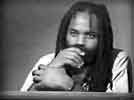
From Mumia Abu-Jamal on death row
Published Jan 13, 2007 7:48 AM
Mumia Abu-Jamal
Mumia Abu-Jamal

Following is a transcript of a Jan. 5 audio column. Go to www.prisonradio.org to hear Mumia’s political messages.

I have struggled to not write about the passing of U.S. President Gerald Ford. I sought to not do so for days.

Yet, the imperial fashion adopted by most of the American press, which praised his administration almost unanimously as “his salvation of the republic,” forced me to put pen to paper.

Much of the reporting that we have seen has simply been dishonest, historically inaccurate and a national amnesiac.

What I found particularly perturbing was the virtually unanimous official opinion that former President Ford’s pardon of Richard M. Nixon was an act of “courage.”

Why? Because he opposed the will of the majority of the American people?

There is something unseemly about issuing a pardon to a man before he was criminally charged with anything, and further, one who built much of his political career on law and order.

Ford, to hear the corporate press tell it, simply made a deep, inner decision to save the nation the trauma of a trial against Nixon by issuing a preemptive pardon.

The problem with this official reading is that there’s plenty of evidence that it just ain’t true.

Acclaimed historian Howard Zinn, in his phenomenal A People’s History of the United States (New York: Harper Collins Perennial, 2003), tells us that months before the Nixon resignation, “top Democratic and Republican leaders in the House of Representatives had given secret assurance to Nixon that if he resigned they would not support criminal proceedings against him.” (p. 546)

The New York Times reported that what Wall Street wanted in case Nixon resigned was “the same play with different players.”

It took a French journalist to voice what no mainstream American paper would—that U.S. political leaders wanted a change of face, but not a change of politics.

Zinn writes: “No respectable American newspaper said what was said by Claude Julien, editor of Le Monde Diplomatique in September 1974. ‘The elimination of Mr. Richard Nixon leaves intact all the mechanisms and all the false values which permitted the Watergate scandal.’ Julien noted that Nixon’s Secretary of State, Henry Kissinger, would remain at his post—in other words, that Nixon’s foreign policy would continue. ‘That is to say,’ Julien wrote, ‘that Washington will continue to support General Pinochet in Chile, General [Ernesto] Geisel in Brazil, General [Alfredo] Stroessner in Paraguay, etc.’ ” (p. 545)

Clearly, for millions of people in the U.S., and in Latin America, “the long national nightmare” was far from over.

Nixon’s regime was criminal to the core, despite his rhetoric about law and order. It was a government that broke laws frequently and flagrantly, and got away with it. Slush funds, burglaries, illegal corporate campaign contributions, illegal wiretaps, corruption— you name it.

A deal, a pardon, a swift goodbye and the imperial press applaud.

“Law and order” was a program for Blacks, Hispanics, poor people, political opponents and radicals. For the wealthy and well-to-do, it was business as usual.

Ford was part of that program.

And because he played his part, the media played their part: “The king is dead. Long live the king.”

From Shakespeare’s Richard II, the immortal lines are written: “For God’s sake, let us sit upon the ground and tell sad stories of the death of kings.”

The stories, we see, are still being told.


Articles (c) copyright 1995-2007 Workers World. Verbatim copying and distribution of this entire article is permitted in any medium without royalty provided this notice is preserved.

Workers World, 55 W. 17 St., NY, NY 10011
Email: ww@workers.org
Subscribe wwnews-subscribe@workersworld.net
Support independent news http://www.workers.org/orders/donate.php

On the picket line


Published Jan 13, 2007 7:56 AM

Rights for mall workers

The Service Employees International Union landed a precedent-setting win when it signed an agreement Dec. 18 with two of the largest shopping mall owners. Simon Property Group Inc., the largest U.S. mall owner, and Westfield Group, one of the largest real estate owners in the world, agreed to work only with contractors that meet specific employee standards.

The contract, the first in the shopping mall industry, will raise the wages of and offer affordable health insurance to approximately 5,000 janitors, security guards and other workers at 373 malls around the country. This reverses an outsourcing trend where companies bid contracts to the cheapest supplier, regardless of how they treat their workers, noted Stephen Lerner, director of SEIU’s Justice for Janitors campaign. (Business Week, Dec. 18)

In the last few months of 2006, more than 10,000 service workers of all backgrounds won higher pay, health insurance and/or the right to vote to form a union. These include 5,300 janitors in Houston, 5,000 security staff in Los Angeles and more than 1,000 janitors and security staff at major universities such as Harvard and the University of Miami. (SEIU press release, Dec. 18)

‘No worker is illegal’ campaign

Rank-and-file members of SEIU in California have launched a “No worker is illegal” campaign. They initiated the protest last fall to pressure SEIU leaders to stop supporting reactionary immigrant bills. The issue is on the agenda at SEIU’s International Executive Board meeting later in January.

Spearheaded by Local 790 in San Francisco, the campaign opposes the McCain-Kennedy bill, which would further militarize the U.S./Mexican border, level sanctions against employers who hire undocumented workers and establish a federal so-called “guest worker” program which does not offer a path to citizenship. One such 2006 program was so discriminatory that the Southern Poverty Law Center sued a contractor and won back wages for hundreds of Latin American immigrants. (Workers World, Dec. 28)

“How are we supposed to organize workplaces with these kinds of laws?” asked Renee Saucedo, a leader of the campaign. (Labor Notes, January 2007)

To support this important rank-and-file initiative before the January meeting, sign the petition at www.noworkerisillegal.org.

Newspaper workers sign contracts

In December members of The Newspaper Guild-CWA and other unions in Boston, Honolulu, Philadelphia, and San Jose signed bitterly fought contracts with more concessions than gains.

“These were tough, tough fights, and the contracts aren’t pretty, but neither is the industry right now,” said Linda Foley, TNG-CWA president, in a Dec. 22 press release.

The release explained: “Newspapers across the country have cut 34,000 jobs in the last five years and have announced thousands more cuts in the past few months. Although some papers are struggling financially, even highly profitable newspapers are slashing jobs, wages and benefits in the race for corporate profit.”

Wisconsin day-care workers win union

The overwhelming majority of the 7,000 licensed child care providers in Wisconsin signed cards to join AFSCME/Child Care Providers Together last fall. The union was certified on Oct. 30.

“Providers joined together because they want to have a voice in the policies that affect their profession,” said Gerald McEntee, president of AFSCME. Support came from workers in metro, suburban, and rural areas across the state and included English-, Spanish- and Hmong-speaking providers. The union will focus on developing leaders charged with setting up a negotiation process.

“Considering the onslaught of W-2 and the smashing of unions/living wage jobs in Wisconsin, which hit women the hardest, especially in Milwaukee where the largest percentage of Black, Latina and Hmong women live, this will help them immensely,” local labor activist Bryan G. Pfeifer told Workers World. “This will also help many poor white women in rural areas.”

AFSCME/Child Care Providers Together is part of a national movement to organize child care professionals, who have been considered self-employed independent contractors because they work at home. Similar campaigns have been successful in Iowa and Oregon and are underway in California, Michigan, Minnesota, New Jersey, New York, Ohio and Pennsylvania. AFSCME represents more than 150,000 family child care providers, day-care center workers, Head Start teachers and early childhood employees.


Articles (c) copyright 1995-2007 Workers World. Verbatim copying and distribution of this entire article is permitted in any medium without royalty provided this notice is preserved.

Workers World, 55 W. 17 St., NY, NY 10011
Email: ww@workers.org
Subscribe wwnews-subscribe@workersworld.net
Support independent news http://www.workers.org/orders/donate.php

Page printed from:
http://www.workers.org/2007/us/picket-line-0118/